

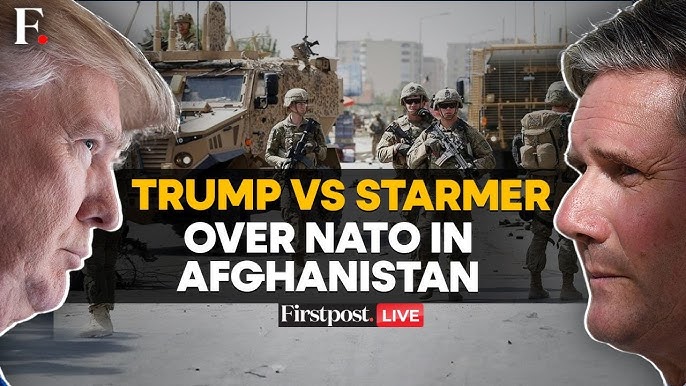
Donald Trump UK soldiers NATO Afghanistan
In late January 2026, U.S. President Donald Trump sparked a major political and diplomatic controversy with remarks about NATO allies’ role in the 20-year war in Afghanistan — only to follow it with a striking reversal that sought to ease tensions with one of America’s closest global partners, the United Kingdom.
This episode not only injected fresh debate into trans-Atlantic relations, but also touched raw nerves about military sacrifice, alliance solidarity and the handling of historical memory. Here’s a detailed look at what happened, why the backlash was so intense, and how the U.S. president tried to respond.
Trump’s Initial Comments About NATO in Afghanistan
The controversy began during a January 22 interview in Davos, Switzerland, where President Trump questioned the role of NATO allies in past U.S. military engagements, particularly the Afghanistan War. In that interview, he suggested that non-U.S. troops remained “a little off the front lines” during combat operations and implied NATO might not support the U.S. in future conflicts.
Specifically, Trump said:
“…they’ll say they sent some troops to Afghanistan… and they did. They stayed a little back, a little off the front lines.”
He went further, suggesting that the United States had “never really asked anything of” its NATO allies, and questioned whether the alliance would be there if the U.S. needed them.
While political debates about burden-sharing within NATO are longstanding, this particular formulation struck many as dismissive, inaccurate and even disrespectful — especially considering the documented sacrifices of allied servicemen and women over two decades of coalition operations.
Immediate Backlash Across the UK and Beyond
The first wave of criticism came from the UK political leadership, with British Prime Minister Sir Keir Starmer publicly condemning Trump’s comments as “insulting and frankly appalling.” Starmer stressed that the remarks had deeply hurt families of servicemen and women who lost their lives or were grievously wounded in Afghanistan.
Starmer’s reactions were echoed throughout British political circles, with figures across the political spectrum defending the history of UK involvement in Afghanistan and underscoring NATO’s collective efforts. Officials cited the sacrifice of 457 British personnel who died during the mission, with many more injured, emphasizing that allied forces fought alongside U.S. troops in intense combat.
Moreover, the controversy quickly spilled beyond politics into wider public discourse. Prince Harry, who served with British forces in Afghanistan, criticized the remarks, saying the sacrifices of British and allied soldiers deserve to be acknowledged truthfully and with respect. His comments highlighted not just political opposition but also deeply personal experiences of loss and camaraderie.
Even veteran communities and public figures in countries like Australia pointed out that allied troops had suffered significant casualties — thereby challenging Trump’s characterization of their role in the conflict.
Diplomatic Repercussions and Wider Implications
The backlash wasn’t confined to Britain. Other NATO members, including Italy and France, publicly defended their soldiers’ contributions to coalition operations, calling Trump’s remarks unacceptable. Italian leaders pointed to their own service members’ sacrifices and demanded a respectful acknowledgment of allied efforts.
This broad diplomatic discomfort signaled that Trump’s comments had wider implications for NATO unity at a time when the alliance faces strategic challenges on several fronts — including Russia’s war in Ukraine and rising security concerns in the Arctic.
The episode also reopened historical debates about Trump’s own military record, particularly his deferments during the Vietnam War era, which critics used to argue that he was ill-placed to comment on the sacrifices of others.
Trump’s U-Turn: Praise for UK Soldiers
In response to the intense criticism, President Trump posted a statement on his social platform, Truth Social, in which he dramatically adjusted his tone. Acknowledging the controversy, he wrote:
“The GREAT and very BRAVE soldiers of the United Kingdom will always be with the United States of America! In Afghanistan, 457 died, many were badly injured, and they were among the greatest of all warriors.”
He also reaffirmed the historical and enduring strength of the U.S.–UK military relationship, describing the British armed forces as having “tremendous heart and soul” and asserting that the bond between the two nations “is too strong to ever be broken.”
This statement marked a significant reversal in rhetoric and appeared aimed at repairing strained diplomatic relations — particularly with the UK — while still avoiding a direct retraction of his original statements.
UK Government Response to Trump’s New Statement
Despite Trump’s efforts to quell the controversy, officials in the UK remained measured. While acknowledging the positive language about British troops, Prime Minister Starmer’s government and other political figures emphasized that the original comments had caused genuine pain and misunderstanding.
Downing Street confirmed that the issue had been raised in direct talks between Starmer and Trump, and that a range of security and geopolitical matters were discussed alongside military cooperation.
However, British leaders also used the moment to reaffirm NATO’s collective defense values and the importance of mutual respect among allies, suggesting that diplomatic relationships, while resilient, cannot be taken for granted.
Broader Reactions: Veterans, Public Figures, and Media
Veterans and families in the UK and other NATO countries voiced strong opinions following the controversy. Many expressed that the reversal, while welcome, didn’t fully address the hurt caused by the initial remarks, especially given the personal sacrifices involved.
Public figures beyond politics — from celebrities to commentators — also weighed in, showcasing that military service and its recognition remain deeply felt issues in public discourse.