

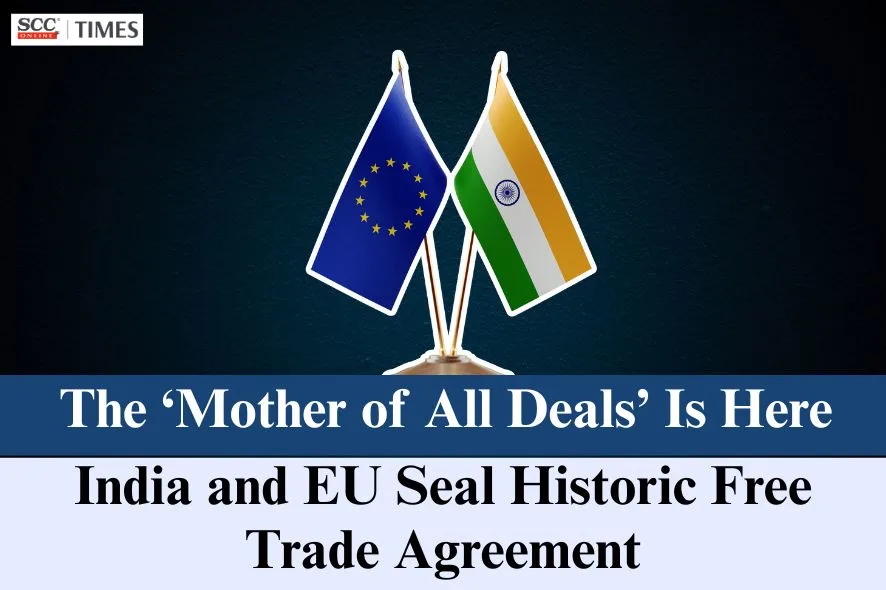
India-EU Free Trade Agreement Explained — India and the European Union (EU) have concluded a historic Free Trade Agreement (FTA) that is being celebrated as one of the most significant commercial achievements in India’s recent economic history. This deal, formally agreed on 27 January 2026 after nearly two decades of negotiations, marks a major turning point in India’s global economic engagement, and could reshape trade, investment, and industry linkages across continents.
In this article, we unpack what the India-EU Free Trade Agreement is, why it matters, how it affects businesses and consumers, and what the future holds as both regions prepare for implementation and ratification.
What Is the India-EU Free Trade Agreement?
The India-EU Free Trade Agreement is a comprehensive trade pact between India and the European Union, covering goods, services, investment, regulatory cooperation, and customs facilitation. Officially signed in New Delhi at the India-EU Summit on 27 January 2026, this deal represents the culmination of long-running negotiations designed to enhance economic cooperation between two of the world’s largest economic partners.
What makes this deal especially impactful is its scope and scale: together, India and the EU represent nearly one-quarter of global GDP and close to two billion consumers — positioning this FTA among the largest bilateral trade agreements in global history.
Why This Deal Is Historic
1. Massive Market Access
Under the agreement, tariffs on a huge range of products traded between India and the EU will be eliminated or significantly reduced. For European exporters, this means duty-free or preferential access to the Indian market on the vast majority of goods — including industrial equipment, technology, machinery, and automotive components. For Indian exporters, it opens one of the most affluent consumer markets in the world, especially for textiles, leather goods, gems and jewelry, and services.
2. Boost to Indian Exports
Government projections and independent assessments indicate that India’s merchandise exports to the EU could double within the next five years as tariff barriers fall and market access improves. Commerce officials have highlighted the importance of this deal for labour-intensive sectors like textiles and apparel, which stand to benefit from preferential duty treatment.
3. Stronger Investment Flows
The agreement also includes investment protections and frameworks designed to encourage greater foreign direct investment (FDI). European companies are expected to increase investments in India’s manufacturing, technology, and services sectors, deepening economic ties and creating jobs. Additionally, partnerships in climate, green technology, and digital trade are positioned to grow under the pact.
4. Regulatory and Services Cooperation
Beyond tariffs, the India-EU FTA incorporates provisions to simplify customs procedures, improve standards cooperation, and enhance market access for services — an area where India has competitive strength, including IT, engineering, consulting, and professional sectors.
Who Benefits Most? Key Sectors and Stakeholders
Textile and Apparel
The Indian textile industry is one of the biggest beneficiaries of this trade deal. With duty-free access to the EU — the world’s largest apparel importer — Indian textile exports are expected to surge, creating millions of jobs in production hubs across states like Tamil Nadu, Gujarat, and Maharashtra.
Leather Goods and Handicrafts
India’s leather, footwear, and artisanal goods industries also gain a competitive edge as tariff barriers lower entry costs into the European markets. This amplifies demand for “Made in India” products and is projected to boost export revenues significantly.
Automobiles and Components
While India has traditionally maintained high tariffs on imported automobiles and parts, discussions are underway for phased tariff reductions under the FTA. European carmakers could enjoy much-improved access to the Indian market under negotiated quotas and tariff reductions, enhancing competition and consumer choice.
Pharmaceuticals and Technology
With harmonized standards and regulatory cooperation, both Indian pharmaceutical exporters and European tech firms stand to benefit from smoother market access, increased R&D collaboration, and shared innovation ecosystems.
Strategic and Geopolitical Impact
The India-EU Free Trade Agreement carries strategic significance beyond economics. In a global landscape marked by protectionism and trade tensions, this deal signals greater economic integration and partnership between the Global South and Europe.
For India, the agreement aligns with its long-term strategy of diversifying international partnerships and reducing dependence on any single trade block. The pact also underscores India’s ambition to play a larger role in global value chains.
European leaders, meanwhile, view this agreement as part of a broader effort to bolster ties with dynamic emerging markets and ensure stable, rules-based trade relations amid shifting geopolitical alliances.
Timeline: From Negotiations to Ratification
Although the India-EU FTA was formally concluded in January 2026, it still requires ratification by EU member states, the European Parliament, and India’s domestic approval procedures before it becomes fully operational. If all approvals are secured on schedule, implementation could begin as early as 2027, potentially unlocking economic benefits in the near term.
Negotiations themselves spanned almost 20 years, with both sides overcoming technical hurdles on market access, standards, and regulatory frameworks. The eventual conclusion demonstrates strong political commitment from leaders on both sides to deepen economic cooperation.
Challenges and Criticisms
Like any major trade agreement, the India-EU FTA has its critics and challenges:
-
Some industry groups worry about sudden competition from cheaper European imports in certain domestic sectors.
-
There are concerns around regulatory harmonization — especially environmental and data rules — which require careful navigation to balance competitiveness with domestic policy priorities.
-
Political voices in India have raised questions about how certain sectors, like steel and agriculture, will fare under the new regime.
However, governments on both sides assert that the agreement includes provisions to protect sensitive sectors while opening doors where mutual gains are clear.
What It Means for Indian Businesses & Consumers
For Businesses
-
Access to new markets: Indian exporters can now compete more aggressively in the EU.
-
Foreign investment: Increased FDI inflows, technology transfers, and joint ventures.
-
Supply chain integration: Easier access to European inputs and superior goods.
For Consumers
-
Greater variety & lower prices: Imported goods — from machinery to luxury wines — may become more affordable over time.
-
Enhanced competitiveness: Firms exposed to global competition will innovate and improve.
The India-EU Free Trade Agreement is more than just a tariff-cutting pact — it is a strategic milestone that elevates India’s economic footprint, creates opportunities across industries, and strengthens global trade linkages in an era of uncertainty. As both regions move toward ratification and implementation, this deal promises to shape trajectories for businesses, consumers, and policymakers alike for years to come.