

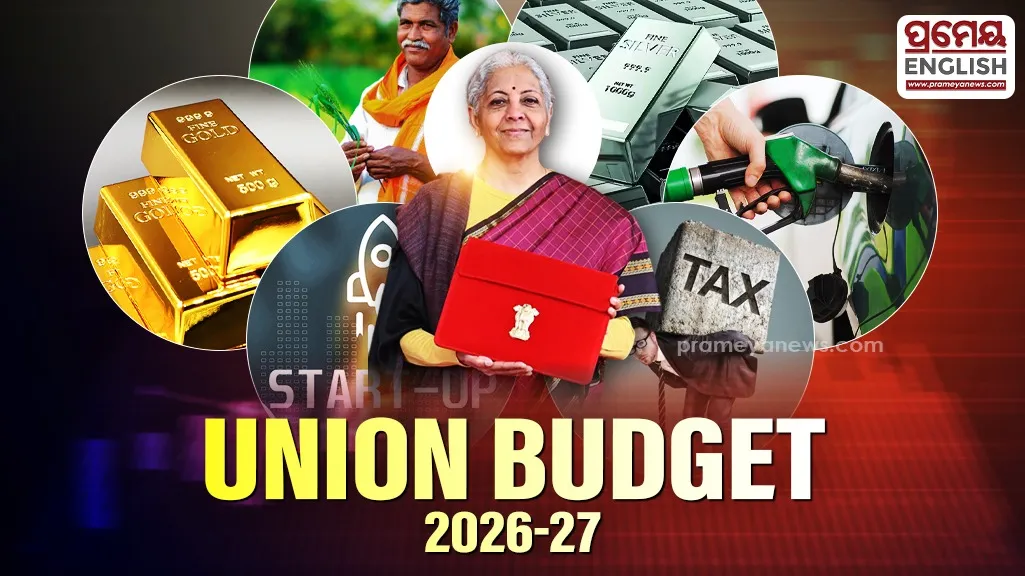
Union Budget 2026–27 India was presented with a bold vision to energise India’s economy, enhance infrastructure spending, support manufacturing and technology leadership, and create jobs across the nation. This budget, crafted by Finance Minister Nirmala Sitharaman, reflects a strategic shift towards future-ready sectors while balancing fiscal discipline and inclusive growth.
Here’s an in-depth look at what this landmark budget includes and how it aims to reshape India’s economic future.
1. Record Capital Expenditure to Power Growth
At the heart of the Union Budget 2026–27 India is a record ₹12.2 lakh crore public capital expenditure (capex) — a significant rise from previous years and one of the highest allocations in India’s fiscal history. This funding aims to build world-class infrastructure, create jobs, and improve connectivity across the country.
What This Means:
-
Infrastructure expansion: Roads, bridges, industrial corridors, urban services, and logistics projects will receive fresh investments.
-
Economic growth engine: Capex growth accelerates employment, supports manufacturing demand, and encourages private sector participation.
-
Greater inclusion: Increased focus on tier-2 and tier-3 cities ensures broader geographic development.
2. High-Speed Rail Corridors and Connectivity Vision
The budget envisages the rollout of seven new high-speed rail corridors linking major business and technology hubs. These corridors will reduce travel times and integrate ecosystems across regions.
These high-speed networks are designed not just as transportation links but as economic corridors that boost real estate, tourism, supply chains, and job creation.
3. Manufacturing & Technology: India’s Strategic Push
A remarkable feature of the Union Budget 2026–27 India is the aggressive push towards modern manufacturing and technology leadership.
Key Initiatives Include:
Biopharma SHAKTI Mission
-
A ₹10,000 crore initiative focused on building India into a global biopharmaceutical innovation and manufacturing hub.
-
Expands biotech capabilities, strengthens clinical trial ecosystems, and enhances regulatory excellence.
India Semiconductor Mission 2.0
-
Next phase of India’s semiconductor strategy to establish industry-led research, design, and manufacturing infrastructure.
-
Aims to move beyond assembly into full supply chains and intellectual property generation.
Electronics Components Manufacturing
-
Outlay enhanced to ₹40,000 crore to deepen India’s electronics manufacturing strength.
Rare Earth Corridors
-
Dedicated corridors in Odisha, Kerala, Andhra Pradesh, and Tamil Nadu to harness rare earth mineral wealth.
-
These minerals are critical for electric vehicles, defence systems, and clean energy technologies.
4. MSME Support & Growth Ecosystem
Small and medium enterprises (MSMEs) are engines of jobs and innovation in India. The Union Budget 2026–27 India introduces measures to transform MSMEs into national and global champions.
📈 Focus Areas:
-
₹10,000 crore SME Growth Fund to help enterprises scale.
-
Expanded Self-Reliant India Fund for growth capital.
-
Mandatory use of TReDS for all Central Public Sector Enterprises (CPSEs), improving cash flows and liquidity.
-
Establishment of “Corporate Mitras” to assist MSMEs with compliance and access to finance.
These actions aim to address the longstanding challenges of finance access, delayed payments, and scalability faced by MSMEs.
5. Services, Innovation & Employment Support
The budget goes beyond traditional sectors and embraces services, creative industries, and youth employment.
Highlights:
-
Support for Animation, Visual Effects, Gaming and Comics (AVGC) labs in schools and colleges.
-
Initiatives for Medical Value Tourism and allied health services.
-
Expansion of institutions for design, sports, and tourism — aligning future skills with job markets.
This diversified focus recognises services as a significant future growth engine for India.
6. Tax Reforms, Ease of Compliance & Investor Confidence
The Union Budget 2026–27 India introduces multiple tax and regulatory reforms to simplify compliance and stimulate investment:
-
Simplified income tax regime with a focus on fewer disputes and easier returns.
-
Reduced tax on share buybacks and lower TCS (Tax Collected at Source) on foreign travel and education expenses.
-
Incentives for cloud services and data centres to make India a competitive hub for digital infrastructure.
These reforms are intended to make India a more investor-friendly destination while reducing taxpayer burden.
7. Textile Sector: An Integrated Growth Programme
India’s textile industry received special focus with a comprehensive programme that includes:
-
National Fibre Scheme: Strengthening production of silk, jute, wool, and new-age fibres.
-
Mega Textile Parks: Promoting world-class production facilities.
-
Support for khadi, handloom, and handicrafts under the Mahatma Gandhi Gram Swaraj initiative.
This effort seeks to elevate India’s global market share in textiles and ensure inclusive rural employment.
8. Transport & Logistics Revolution
Improving logistics efficiency is critical for India’s competitive edge.
-
20 new national waterways will enhance inland shipping capacity.
-
Coastal Cargo Promotion Scheme to double coastal and inland water transport’s share of freight.
These initiatives lower freight costs, reduce carbon footprint, and streamline multimodal transport networks.
9. Fiscal Discipline & Growth Outlook
While the focus remains on growth spending, the government continues to prioritise fiscal health with disciplined deficit targets and revenue reforms.
This ensures investor confidence and preserves India’s macroeconomic stability amid global uncertainty.
10. Looking Ahead: Long-Term Strategic Vision
Beyond immediate allocations, the Union Budget 2026–27 India sets the foundation for future economic progress through:
-
Technology-driven manufacturing
-
Infrastructure expansion
-
Inclusive growth models
-
Regulatory clarity
These pillars aim to position India as a global economic powerhouse in the coming decade.
The Union Budget 2026–27 India is not just a fiscal document — it’s a strategic roadmap for transformation. With enhanced capex, manufacturing focus, technology ecosystems, MSME empowerment, and fiscal prudence, this budget sets ambitious goals for job creation, digital empowerment, and global competitiveness. If implemented effectively, it could define India’s economic story for years to come.