

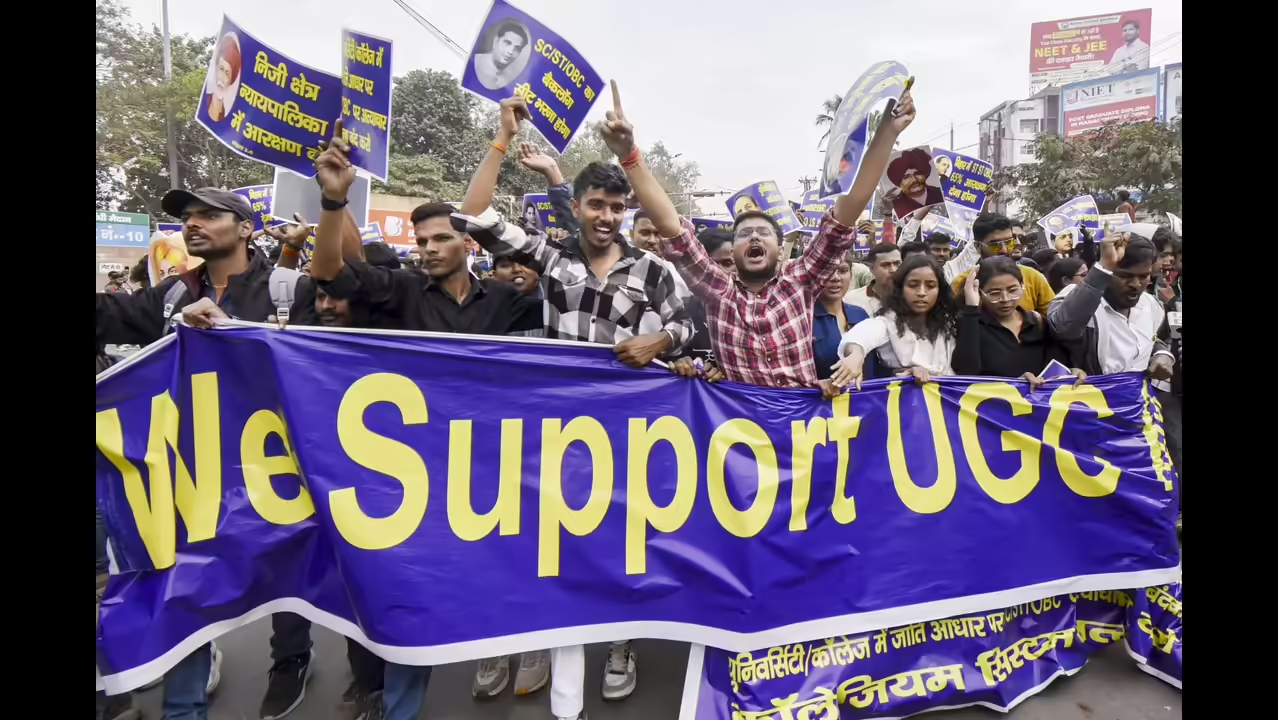
The phrase UGC Regulations Protest Patna has become a topic of heated debate across India’s educational and political landscape. At the core of this controversy are new rules introduced by the University Grants Commission (UGC), aimed at promoting equity in higher education institutions — but which have instead triggered protests, legal challenges, and social divisions. In Patna, the capital of Bihar, dozens of students took to the streets in late January and early February 2026, reigniting a national discourse about academic freedom, caste equity, and constitutional rights.
What Are the New UGC Regulations?
In January 2026, the UGC notified the Promotion of Equity in Higher Education Institutions Regulations, 2026. These rules were designed to combat caste-based discrimination and promote an inclusive environment on college and university campuses. The regulations require every institution to establish structures such as Equal Opportunity Centres (EOCs), equity committees, and campus vigilance squads tasked with processing complaints and monitoring incidents of bias.
However, while the stated objective of these regulations is to create safer and more equitable spaces for historically marginalized communities, critics have raised concerns. Opponents argue that the rules are vaguely worded and may be misused, creating uncertainty and fear among students who do not fall under reserved categories.
How the Protests Started
The first waves of protest under the banner of UGC Regulations Protest Patna emerged when groups of students — many from the so-called “general category” — and some right-leaning organizations publicly opposed the new regulations. One early demonstration occurred outside the UGC headquarters in New Delhi, where students argued that the rules could lead to campus chaos and discrimination against those not listed as protected categories.
In Patna specifically, students gathered at strategic locations including Patna College and Gandhi Maidan, staging demonstrations that quickly drew attention. Although the protests began peacefully, tensions rose as some participants attempted to breach police barricades set up to contain the march. Authorities responded by deploying security forces and restricting access to certain parts of the city center, leading to moments of friction — including several detentions and a minor altercation reported when students pushed past barricades.
What Protesters Are Saying
At the heart of the UGC Regulations Protest Patna are grievances about how the new rules would be implemented:
-
Lack of safeguards for general category students: Many protesters believe the regulations do not include clear mechanisms for students outside the Scheduled Caste (SC), Scheduled Tribe (ST), and Other Backward Classes (OBC) groups to raise complaints or protect themselves from false allegations.
-
Vague wording and potential misuse: Critics argue that the rules could be misinterpreted, leading to disciplinary action without sufficient evidence or a clear burden of proof.
-
Risk of campus disruption: Opponents fear that enforcement could foster a climate of constant surveillance and conflict between social groups rather than fostering harmony.
Student leaders in Patna, including figures like Manish Yadav and Amar Azad Paswan, used impassioned language, suggesting they were prepared to escalate their actions if their demands were not addressed.
Supporters of the Regulations Speak Out
It is important to recognize that not all voices in Patna and across India oppose the new guideline. Many groups, including student organisations and social justice advocates, argue that the equity regulations are essential to address long-standing discrimination on campuses. The All India Student Association (AISA), for instance, has endorsed the rules, describing them as the outcome of years of struggle against entrenched bias in higher education.
These supporters point to increasing reports of caste-based discrimination in colleges and claim that stronger regulatory mechanisms are necessary to protect marginalized students. The goal, they argue, is not to target any group unfairly but to ensure that all students have a level playing field.
Political Reactions and National Response
The UGC Regulations Protest Patna has not remained confined to educational circles. Political parties across India are now deeply divided over the issue. Some parties have backed the protesters, framing the regulations as unconstitutional or encroaching on personal freedoms, while others support the government’s intent to tackle discrimination. This political polarization reflects the sensitive intersection of caste, education policy, and electoral politics in India.
The central government has tried to respond with reassurances. Union Education Minister Dharmendra Pradhan publicly stated that the regulations would be implemented fairly and that no one would be subjected to injustice.
Legal Battles and Supreme Court Intervention
Amid escalating protests, the Supreme Court of India intervened in late January 2026 by issuing an interim stay on the implementation of the UGC equity regulations, citing concerns that the language of the regulations was unclear and open to misuse. This pause has added a legal dimension to the UGC Regulations Protest Patna and similar demonstrations across the country.
The court’s action underscores the gravity of the controversy and highlights ongoing debates over constitutional rights, due process, and the balance between equity and fairness in public policy.
What Comes Next?
The future of the new UGC regulations and the protests they sparked — including in Patna — remains uncertain. With legal challenges pending, political debate intensifying, and students mobilizing on campuses nationwide, the issue is far from resolved. Key developments to watch include:
-
The Supreme Court’s final ruling on the validity of the regulations.
-
Potential revisions to the rules to clarify definitions and safeguards.
-
Ongoing student mobilisation and community response across India.
The UGC Regulations Protest Patna represents a crucial flashpoint in India’s ongoing struggle to define the future of higher education. At stake are questions of equity, fairness, and academic freedom in a diverse and complex society. Whether the UGC’s reform efforts succeed or stall, the protests have already reshaped the national conversation about caste, rights, and the role of regulatory bodies in education.