

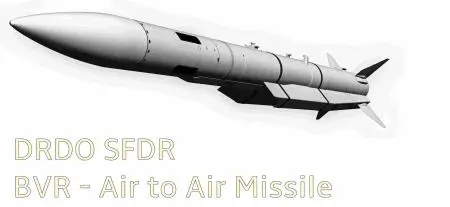
DRDO Ramjet Missile Technology: A Turning Point for Indian Defence
DRDO ramjet missile technology has emerged as one of the most important defence breakthroughs for India in recent years. With the successful demonstration of this advanced propulsion system, DRDO ramjet missile technology has enabled India to join the elite missile club—an achievement reserved for only a few global military powers. This milestone significantly strengthens Indian defence capabilities by delivering faster, longer-range, and more lethal air-to-air missiles.
With this success, India has officially joined the elite missile club, a space occupied by only a handful of technologically advanced military powers. But what exactly is ramjet technology, why is it so difficult to master, and why does it matter so much for Indian defence? Let’s break it down in detail.
What Exactly Did DRDO Achieve?
India’s Defence Research and Development Organisation (DRDO) successfully demonstrated Solid Fuel Ducted Ramjet (SFDR) technology during a high-speed missile flight test. This test validated the core propulsion system that allows missiles to maintain sustained supersonic speed throughout their flight, rather than slowing down after initial boost.
Unlike traditional missile engines, the SFDR system keeps pushing the missile forward even in the terminal phase—where combat effectiveness matters the most.
This achievement instantly elevates India into a very exclusive group of nations with operational ramjet missile capability.
Understanding Ramjet Missile Technology (In Simple Terms)
A ramjet engine is a type of air-breathing jet engine. Instead of carrying oxygen for combustion (like rockets do), it uses oxygen from the surrounding atmosphere.
Key Difference from Traditional Missiles:
-
Rocket missiles burn fuel quickly and then coast.
-
Ramjet missiles keep producing thrust during flight.
Why This Matters:
-
Sustained speed
-
Longer range
-
Higher kill probability
-
Better maneuverability
The Solid Fuel Ducted Ramjet developed by DRDO uses solid fuel combined with atmospheric air, offering the perfect balance between power, efficiency, and simplicity.
How the SFDR System Works
The SFDR missile propulsion system works in multiple stages:
1️⃣ Initial Booster Phase
A solid rocket booster accelerates the missile to supersonic speed. This is necessary because ramjet engines only work efficiently at high speeds.
2️⃣ Air Intake Activation
Once sufficient speed is achieved, air intakes open, allowing atmospheric oxygen to flow into the engine.
3️⃣ Sustained Combustion
Solid fuel burns steadily using incoming air, producing continuous thrust without carrying oxidizers.
4️⃣ High-Energy Terminal Phase
The missile maintains high speed and energy till impact, making it extremely difficult for enemy targets to evade or intercept.
This system is especially deadly in air-to-air combat, where reaction time is minimal.
Why Ramjet Technology Is So Difficult to Master
Ramjet engines operate under extreme conditions:
-
Temperatures above 1,000°C
-
Supersonic airflow control
-
Precise fuel-air mixing
-
Advanced thermal materials
Even minor design flaws can cause instability or engine failure. This is why only a few countries—like the US, Russia, and France—have operational ramjet missiles.
India mastering this technology reflects decades of research, testing, and indigenous innovation.
Why This Is a Major Win for Indian Defence
🔹 1. Massive Boost to Air-to-Air Combat Power
Ramjet missiles can chase enemy aircraft at high speed even at long distances. This gives Indian fighter jets a first-strike advantage.
🔹 2. Longer Range Without Bigger Missiles
Because ramjets are more efficient, missiles can fly farther without increasing size or weight—a huge tactical benefit.
🔹 3. Harder to Evade
Sustained thrust means the missile remains agile and deadly until the last second, making evasive maneuvers nearly useless.
🔹 4. Reduced Foreign Dependency
This technology reduces reliance on imported missile propulsion systems, strengthening Atmanirbhar Bharat in defence manufacturing.
Impact on Indian Air Force (IAF)
The Indian Air Force stands to gain the most from DRDO’s ramjet success.
Future Applications:
-
Advanced variants of Astra air-to-air missiles
-
Integration with fighters like Tejas, Su-30MKI, Rafale
-
Enhanced beyond-visual-range (BVR) combat capability
In modern air warfare, whoever fires first usually wins—and ramjet missiles ensure India can strike faster and farther.
Strategic Importance in Regional Security
India operates in a complex neighbourhood with rapidly evolving military threats. Advanced missile technology sends a strong strategic signal.
Key Advantages:
-
Deterrence against hostile air power
-
Balance of power in the Indo-Pacific
-
Improved defence preparedness
This achievement strengthens India’s position as a serious military and technological power on the global stage.
Indigenous Innovation & Atmanirbhar Bharat
The SFDR program reflects India’s growing maturity in:
-
Advanced materials
-
Propulsion science
-
Precision manufacturing
-
High-speed aerodynamics
Instead of importing critical technologies, India is now developing, testing, and refining them domestically—a crucial shift for long-term national security.
What Happens Next?
While the successful test is a major milestone, further steps include:
-
Multiple validation trials
-
Integration with operational missile systems
-
Production-scale manufacturing
-
Deployment across air platforms
Once fully inducted, ramjet-powered missiles will redefine India’s aerial combat doctrine.
DRDO ramjet missile technology is far more than a scientific success—it’s a strategic game-changer for Indian defence. By mastering this complex propulsion system, India has joined the elite missile club and significantly enhanced its military readiness for future conflicts.
This breakthrough proves that India is no longer just catching up—it is innovating, leading, and shaping the future of modern warfare.