

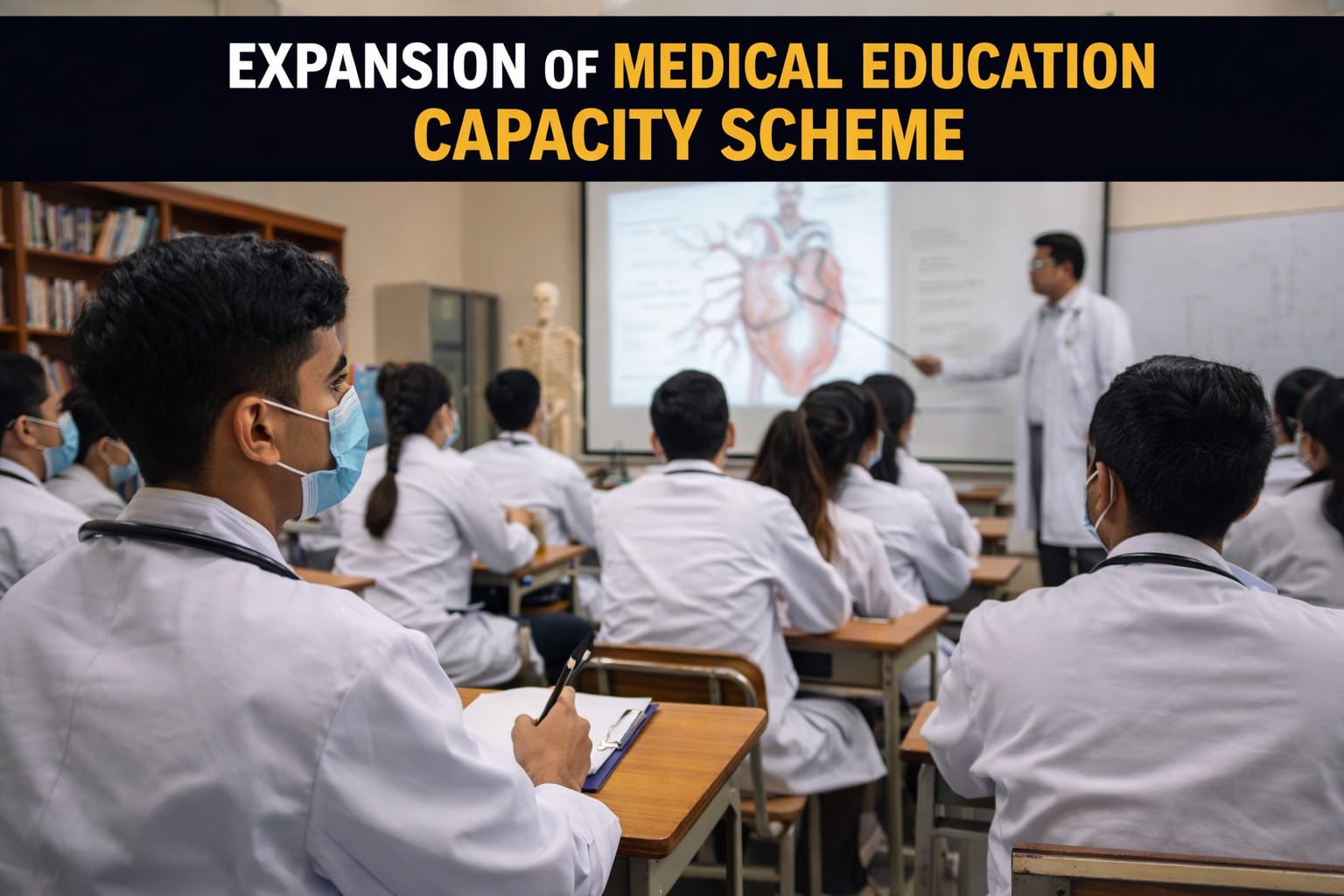
Expansion of Medical Education Capacity Scheme: A Comprehensive Overview
The Expansion of Medical Education Capacity Scheme is emerging as one of the most important government healthcare reforms in India in recent years. With the Union Cabinet’s approval of Phase III of this Centrally Sponsored Scheme (CSS), India is set to significantly expand its medical education infrastructure, adding over 10,000 new medical seats — both at the undergraduate (MBBS) and postgraduate (PG) levels — by the end of 2028-29.
This initiative is not just about increasing the number of seats; it represents a strategic effort to strengthen India’s healthcare system, boost access to quality education for aspiring medical professionals, and address long-standing doctor shortages across underserved regions.
What Is the Expansion of Medical Education Capacity Scheme Phase III?
The Expansion of Medical Education Capacity Scheme Phase III refers to the third phase of a long-term government effort to upgrade and strengthen medical colleges, postgraduate training institutes, and associated healthcare facilities throughout the country. This scheme is part of a broader vision to widen access to medical education and ensure that sufficient trained doctors and specialists are available nationwide.
The core objective of this phase is to add 5,023 undergraduate MBBS seats and 5,000 postgraduate medical seats within existing government medical colleges, standalone postgraduate institutes, and hospitals by the financial year 2028-29.
Funding and Implementation Timeline
-
Total Central and State Outlay: ₹15,034.5 crore
-
Central Government Share: ₹10,303.2 crore
-
State Government Share: ₹4,731.3 crore
-
Implementation Period: 2025-26 to 2028-29
Under this scheme, the cost ceiling per seat has been enhanced to ₹1.5 crore, reflecting the government’s commitment to providing quality infrastructure, modern facilities, and professional training environments for medical students.
Key Objectives of the Scheme
The Expansion of Medical Education Capacity Scheme aims to deliver impactful results across multiple areas of healthcare and education. Its core objectives include:
1. Increase Access to Medical Education
With over 20 lakh students appearing each year for the NEET examinations, medical education opportunities have historically been limited. By adding over 10,000 medical seats, this scheme widens access and reduces intense competition for limited slots.
2. Strengthen Doctor Availability
India faces a shortage of trained medical professionals — especially specialists — in rural and underserved urban regions. The scheme’s expansion of seats directly addresses this gap by increasing the future supply of doctors and healthcare workers.
3. Enhance Quality of Medical Training
The initiative does not only increase seats but also upgrades infrastructure, teaching resources, laboratories, and faculty qualifications to match international standards.
4. Promote Regional Healthcare Balance
Expanding capacity in government institutions across multiple states will help ensure that medical education and healthcare delivery are more evenly distributed across the country.
5. Boost Healthcare Economy
The increase in trained medical professionals contributes to economic growth, medical tourism, and employment opportunities for doctors, paramedical staff, researchers, administrators, and allied health service providers.
Benefits to Students and Public Health
The Expansion of Medical Education Capacity Scheme offers meaningful benefits:
More Opportunities for Aspiring Doctors
With the current shortage of seats relative to applicants, thousands of students each year fail to secure medical education opportunities. The addition of 10,023 seats gives prospects a better chance to study medicine within the country rather than going abroad.
Improved Healthcare Services
Increasing both MBBS and PG capacity helps ensure a steady supply of doctors and specialists throughout the country — particularly in regions with poor access to medical facilities.
Workforce Development and Jobs
Expanded medical education capacity supports career growth and job creation — from faculty and medical researchers to administrators and technical staff.
Global Standards of Medical Education
By upgrading infrastructure and training, medical institutions can offer education that aligns with international benchmarks, encouraging global recognition of Indian medical professionals.
Impact on Healthcare and Society
Addressing Doctor-Population Ratio
India’s doctor-to-population ratio has long been below ideal. By expanding seats and training capacities, the scheme helps move India closer to achieving better healthcare coverage for all citizens.
Healthcare System Resilience
The scheme also strengthens the overall health system’s ability to respond to emergencies, pandemics, and future health challenges by building a larger, better-trained pool of medical professionals.
Reduced Dependence on Foreign Medical Education
Many Indian students seek medical education abroad due to limited seats domestically. With these additional seats, more students can pursue medical careers at home, which also decreases financial burdens and travel hardships.
Implementation Strategy
The Ministry of Health & Family Welfare, along with the National Medical Commission, is responsible for issuing detailed guidelines for implementing the expansion. These include:
-
Identifying institutions for capacity enhancement
-
Allocating funds to government medical colleges
-
Strengthening faculty recruitment standards
-
Managing infrastructure quality and compliance
-
Monitoring progress through periodic reviews
Updated regulations like the Medical Institutions (Qualifications of Faculty) Regulations 2025 support these goals by allowing skilled professionals to join academic roles more efficiently.
What Happens Next?
Over the next three to four years, government authorities will work closely with state health departments to ensure that the expansion scheme is implemented smoothly and effectively:
- Upgrading laboratories and classrooms
- Hiring qualified teachers and specialists
- Completing construction and modernization projects
- Reviewing curriculum updates
- Ensuring equitable distribution of seats across all regions
The Expansion of Medical Education Capacity Scheme (CSS Phase III) represents a watershed moment in India’s healthcare and education policy. By adding over 10,000 new seats, strengthening medical institutions, and improving the quality of training, this initiative will reshape the future of health services in the country. Students, doctors, and healthcare systems all stand to benefit as India continues its journey toward improved health outcomes, educational access, and economic growth.
| Application online | Click Here |