

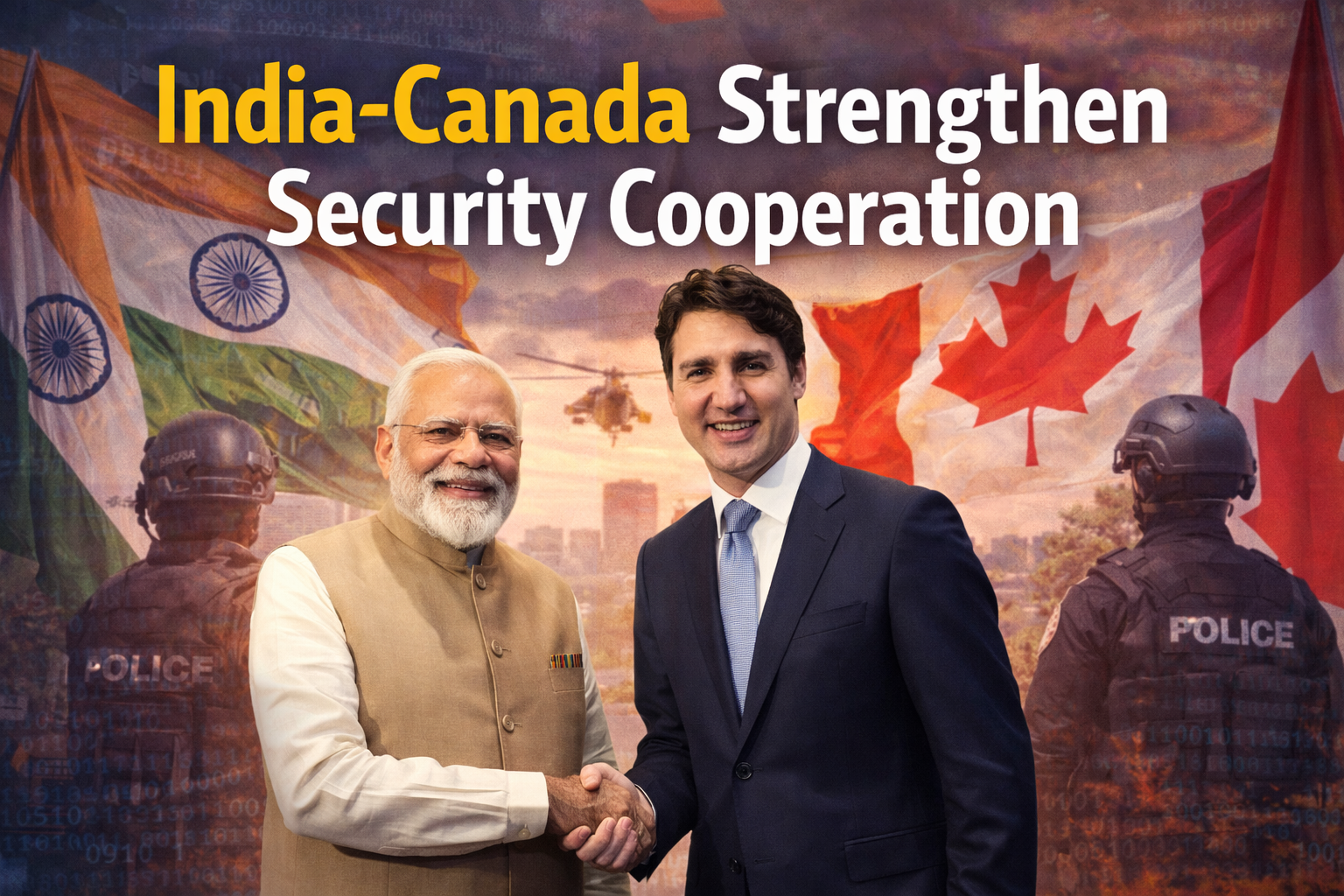
India-Canada Strengthen Security Cooperation: A Major Boost to Bilateral Strategic Ties
India-Canada strengthen security cooperation has emerged as a major diplomatic development following high-level meetings between India’s National Security Adviser (NSA) Ajit Doval and his Canadian counterparts in Ottawa, Canada. In early February 2026, both nations agreed to enhance collaboration across a range of security dimensions — from national security and law enforcement cooperation to cybersecurity, information sharing, and counter-terrorism.
This article dives deep into the implications of this agreement, why it matters, what both nations are planning, and how this cooperation reflects broader geopolitical shifts.
Background: Reinforcing Ties After Diplomatic Strain
The India-Canada security cooperation initiative comes at a time when diplomatic ties between the two countries have faced ups and downs. Relations hit a rough patch after political tensions emerged in 2023 over sensitive issues. However, recent leadership changes in Canada and ongoing diplomatic engagement have opened the door for renewed cooperation.
The latest round of talks were held in Ottawa on February 6–7, 2026, where NSA Ajit Doval met Canada’s Deputy Clerk and National Security and Intelligence Advisor, Nathalie G. Drouin, alongside other senior officials including Canada’s Minister for Public Safety, Gary Anandasangaree.
What Was Agreed: Shared Work Plan & Liaison Officers
During the meetings, India and Canada agreed on a shared work plan that will serve as the roadmap for strengthening bilateral security cooperation. The plan focuses on practical collaboration across key priorities, including:
Posting Security & Law Enforcement Liaison Officers
— Each country will post dedicated liaison officers in the other nation to facilitate real-time coordination and information exchange on security issues.
These officers will act as direct points of contact for:
-
Law enforcement agencies
-
National security institutions
-
Intelligence sharing mechanisms
The goal is to improve communication channels and reduce delays in handling cross-border security concerns.
Key Areas of Cooperation
Here’s a breakdown of the main areas where India and Canada plan to enhance security collaboration:
1. National Security & Law Enforcement
The shared work plan emphasizes increased cooperation on national security and law enforcement issues. Both countries will build on existing relationships between agencies to streamline operational collaboration.
This includes joint efforts on:
-
Tracking and disrupting transnational organized crime
-
Joint investigations into criminal networks operating across borders
-
Exchange of intelligence on security threats
2. Combating Drug Trafficking
A specific highlight of the agreement is coordination on issues such as illegal drug flow, especially fentanyl precursors, which have become a major global security challenge.
Fentanyl and similar synthetic opioids are often trafficked through transnational networks that operate across multiple regions. By establishing liaison officers and better coordinating data sharing, India and Canada hope to disrupt these dangerous networks more effectively.
3. Cybersecurity Cooperation
Cyber threats — including hacking, ransomware, and state-sponsored intrusions — are a key security concern for both nations. As part of the agreement:
-
Both countries will formalize cooperation on cybersecurity policy.
-
Agencies will share information on cyber threats and vulnerabilities.
This collaboration will help protect critical infrastructure, government systems, and private sector data in both countries.
4. Fraud and Immigration Enforcement
The two governments also committed to continuing discussions on cooperation related to fraud and immigration enforcement, consistent with their domestic laws and international obligations.
These discussions aim to ensure that both nations are aligned on policies that protect citizens while respecting legal frameworks that govern immigration and mobility.
Why This Security Cooperation Matters
The decision by India and Canada to strengthen security cooperation is significant for several reasons:
1. Restoring Trust After Diplomatic Difficulties
Bilateral relations between India and Canada saw strains over leadership changes and political disputes in recent years. The resumption of structured, operational security cooperation signals a willingness to reset and stabilize relations at a strategic level.
2. Responding to Shared Threats
In an increasingly interconnected world, security threats like terrorism, drug trafficking, cybercrime, and human trafficking do not respect borders. A cooperative security framework allows both nations to combine resources, intelligence, and expertise to tackle these global challenges.
3. Mutual Benefits for Law Enforcement
Liaison officers will help speed up coordination between police forces and intelligence agencies — critical when time-sensitive action is needed to neutralize threats or alert each other about emerging dangers.
Historical Context: Diplomatic Reset
The move toward enhanced cooperation is also part of a broader diplomatic reset that began in 2025 when both countries worked to reinstate High Commissioners and resume senior-level dialogues after relations cooled in previous years.
This context is important. While security cooperation is urgently needed, it also serves as a stabilizing force within the larger framework of economic, cultural, and strategic ties between the two democracies.
Challenges & Considerations Ahead
Even with an agreed workplan — challenges remain. Some of the areas that will require sustained effort include:
📍 Coordinating Across Legal Systems
India and Canada have different legal frameworks governing data privacy, immigration, and law enforcement authority. Harmonizing cooperation without compromising legal standards will require careful negotiations.
📍 Public Perception and Political Will
Security cooperation involves sensitive topics like intelligence sharing and transnational security. Maintaining political support in both nations — and ensuring transparency where possible — will be crucial.
📍 Global Geopolitical Shifts
India and Canada’s security cooperation does not exist in a vacuum. Broader geopolitical developments, including relationships with other regional partners, NATO allies, and global security priorities, will influence how deep this cooperation evolves.
A Strategic and Forward-Looking Partnership
The recent agreement in Ottawa between India and Canada represents a turning point toward stronger bilateral security cooperation. With a shared work plan, liaison officers, and commitments to tackle cyber threats, drugs, and organized crime, both countries have taken a significant step toward mutual trust and operational synergy.
As global security challenges evolve, so too must multilateral cooperation — and this latest agreement is a strong foundation for future strategic engagements between two important democratic partners on the world stage.