

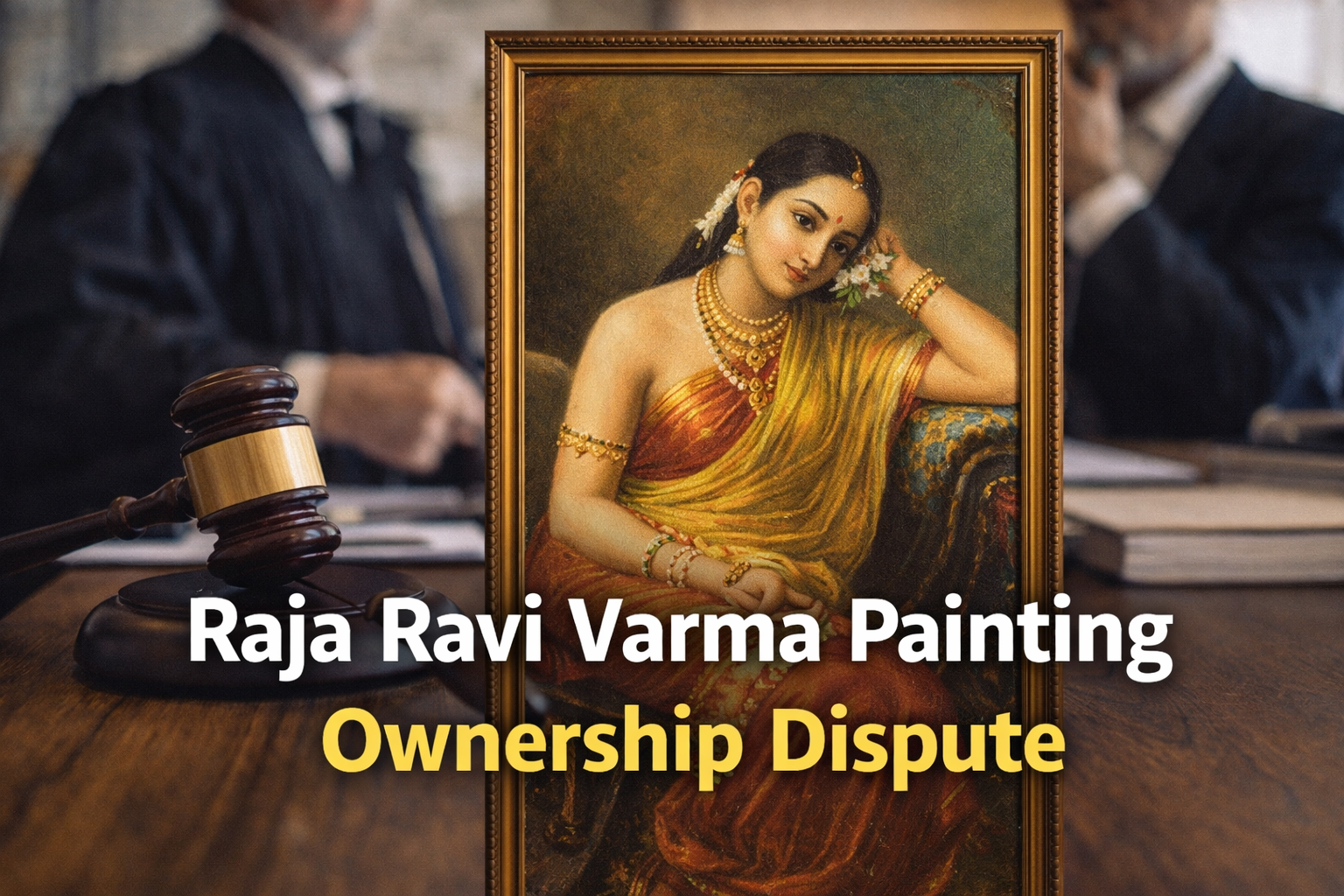
Raja Ravi Varma Painting Ownership Dispute: Why This Legal Battle Matters to India’s Cultural Heritage
The Raja Ravi Varma painting ownership dispute has reignited a nationwide debate around cultural heritage, private ownership, and the preservation of India’s artistic legacy. At the center of the controversy is a valuable painting attributed to Raja Ravi Varma, one of India’s most celebrated artists, whose works are considered national treasures today.
This dispute is not just about who owns a painting—it raises critical questions about who has the right to possess, display, sell, or preserve iconic Indian artworks that form the backbone of the country’s cultural identity.
Who Was Raja Ravi Varma and Why His Paintings Matter
Raja Ravi Varma was a pioneering Indian painter who blended European academic realism with Indian mythological themes. Born in Kerala in the 19th century, he revolutionized Indian art by portraying gods, goddesses, and historical figures with human expressions and realistic detail.
His paintings of characters from the Ramayana, Mahabharata, and Indian folklore shaped how generations of Indians visualized divine figures. Today, his works are:
-
Displayed in national museums
-
Auctioned for crores of rupees
-
Protected under cultural heritage discussions
Because of this immense historical value, any ownership dispute involving his paintings automatically becomes a matter of public interest.
What Is the Raja Ravi Varma Painting Ownership Dispute?
The Raja Ravi Varma painting ownership dispute involves conflicting claims over the legal ownership of a rare artwork attributed to the artist. The disagreement has reportedly emerged between:
-
Private collectors or heirs claiming inheritance or purchase rights
-
Cultural institutions or trusts asserting historical or custodial ownership
-
Government authorities examining heritage protection laws
In some cases, such disputes arise decades after the painting changes hands, often due to missing documentation, unclear wills, or disputed sales from colonial-era transactions.
Why the Dispute Has Gained National Attention
This case has drawn attention for several reasons:
1. Rarity of the Artwork
Only a limited number of authenticated Raja Ravi Varma paintings exist. Each newly surfaced piece attracts scrutiny from historians, collectors, and the legal system.
2. High Monetary Value
Original works by Raja Ravi Varma can fetch ₹10 crore to ₹40 crore or more at auctions, making ownership battles financially intense.
3. Cultural Significance
Many art historians argue that such paintings should remain accessible to the public rather than locked in private vaults.
4. Legal Precedent
The verdict could set a precedent for future disputes involving ancient manuscripts, sculptures, and colonial-era artworks.
Legal Questions at the Core of the Dispute
The ownership conflict brings up several complex legal issues:
Authenticity Verification
Courts often rely on:
-
Expert art historians
-
Scientific testing (pigment, canvas age)
-
Provenance records
If authenticity is questioned, the value and ownership claims can collapse.
Provenance and Documentation
A major challenge in Indian art disputes is the lack of clear ownership records, especially for artworks created before independence.
Heritage Laws vs Private Property
India’s heritage laws allow governments to restrict export or sale of culturally important objects—but do they override private ownership rights?
This grey area is often where disputes intensify.
Museums, Trusts, and Public Interest
Cultural organizations argue that masterpieces like Raja Ravi Varma’s paintings belong to the nation, even if legally owned by individuals.
Their concerns include:
-
Risk of paintings being sold abroad
-
Poor conservation in private hands
-
Loss of public access
Some experts advocate for a national registry of important artworks, ensuring transparency and accountability.
The Role of Art Auctions and the Global Market
International auction houses have played a major role in increasing the global value of Indian art. However, they also complicate ownership disputes.
Once a painting enters the global market:
-
Tracking its movement becomes difficult
-
Legal jurisdiction issues arise
-
Repatriation becomes nearly impossible
This has strengthened calls for stricter regulation of historically significant Indian artworks.
Ethical Debate: Who Should Own Cultural Icons?
Beyond legality, the Raja Ravi Varma painting ownership dispute has sparked ethical debates:
-
Should cultural icons be privately owned?
-
Should heirs have absolute rights to sell heritage assets?
-
Should the government intervene more actively?
Public opinion remains divided, but there is growing support for balanced solutions, such as:
-
Government acquisition with compensation
-
Long-term museum loans
-
Shared custodianship models
Impact on India’s Art and Cultural Policy
This dispute could influence future policy changes, including:
-
Clearer art ownership laws
-
Mandatory disclosure of private collections
-
Stronger export restrictions
-
Better funding for museums to acquire masterpieces
Legal experts believe India is entering a phase where art law will become a more prominent legal field.
What Happens Next?
The final outcome depends on:
-
Court rulings
-
Authenticity verification
-
Possible settlements between parties
Regardless of the verdict, the case has already succeeded in bringing India’s fragile art heritage system into public focus.
Why This Case Matters Beyond One Painting
The Raja Ravi Varma painting ownership dispute is symbolic of a larger issue:
How does a modern nation protect its past while respecting individual rights?
As India’s art market grows and global interest intensifies, similar disputes are likely to increase. The way this case is resolved may define how India safeguards its cultural legacy for future generations.