

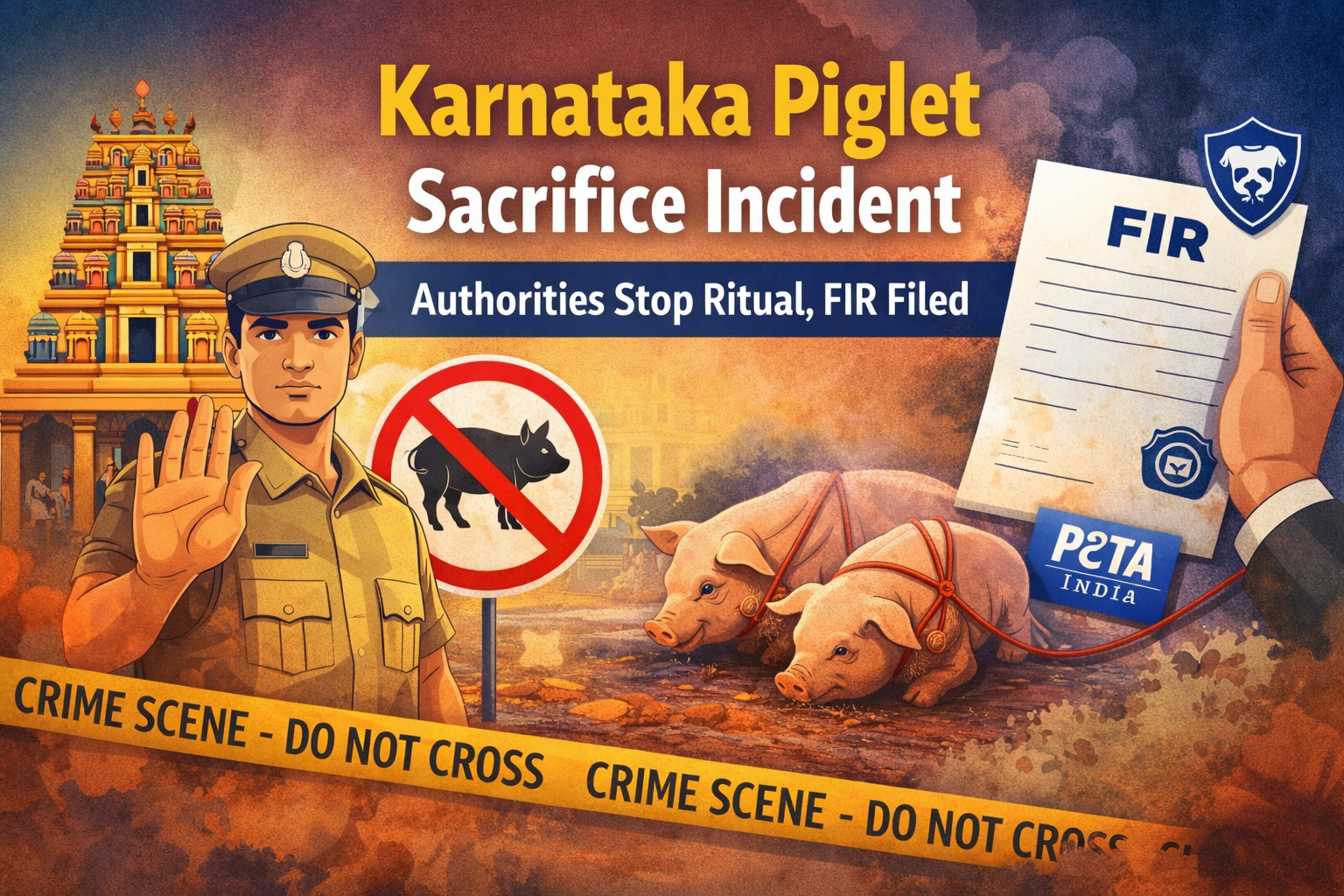
Karnataka Piglet Sacrifice Incident: Authorities Halt Ritual & File FIR — What Happened and Why It Matters
Karnataka piglet sacrifice incident took place recently at a temple in Krishnarajapete, Mandya district, stirring widespread debate over animal rights, tradition, and legal enforcement. In a significant move, local authorities intervened to stop the ritual, and an FIR was filed against the temple under the Karnataka Prevention of Animal Sacrifices Act, 1959 and relevant sections of the Bharatiya Nyaya Sanhita, 2023 after animal rights group PETA India raised alarm about the cruel killing of piglets as part of a sacrificial practice.
This incident underscores growing tensions between traditional practices and modern legal frameworks, particularly in places of worship where animal sacrifice has taken place historically. In this in-depth article, we explore what happened, explain the legal context, examine reactions from authorities and activists, and discuss what this means for animal welfare and cultural customs in Karnataka.
What Exactly Happened at the Temple?
The Karnataka piglet sacrifice incident unfolded at the Sri Kshetra Chandagonahalli Amma Temple, located in Krishnarajapete in Mandya district. According to police reports and animal rights organizations, several piglets were being brought into the temple premises and slaughtered in public as part of a customary sacrificial ritual — a practice that had reportedly been ongoing for some time.
The matter caught public attention when PETA India filed a formal complaint with local authorities, highlighting the inhumane treatment of the animals. They described scenes where very young animals were allegedly butchered within the temple grounds — a practice clearly at odds with modern animal welfare laws.
How Authorities Responded
Following the complaint, the Mandya District Commissioner (DC) issued instructions to immediately halt the sacrificial practice and notify relevant departments. The Animal Husbandry Department (AHD) was directed to issue a legal notice to the temple’s governing body, mandating an end to the ritual. Subsequently, the police registered an official FIR (First Information Report) against responsible parties.
According to statements from the KR Pet Rural police inspector, the FIR was registered under Sections 3, 5, and 6 of the Karnataka Prevention of Animal Sacrifices Act, 1959 — a law that prohibits animal sacrifices at places of public religious worship — and Section 325 of the Bharatiya Nyaya Sanhita, 2023, which deals with causing grievous hurt.
Understanding the Legal Framework
Karnataka Prevention of Animal Sacrifices Act, 1959
The Karnataka Prevention of Animal Sacrifices Act, 1959 is a state law designed to prohibit the sacrifice of animals or birds within temple premises or places of public religious worship. It criminalizes the performance, facilitation, or supervision of animal sacrifices and includes penalties such as fines and imprisonment.
This law clearly states that no person shall perform, assist, or participate in an animal sacrifice inside a temple or its immediate precincts, nor permit such acts under their supervision. Violations can lead to legal consequences, including arrest, fines, or imprisonment.
Why This Incident Sparked Controversy
The Karnataka piglet sacrifice incident touches upon several complex issues:
1. Conflict Between Tradition and Law
Many religious communities across India have historically included animal sacrifices as part of their rituals — often believing that such offerings are a way to appease deities, seek blessings, or fulfill vows. However, modern law clearly prohibits such practices — especially within temple boundaries.
For some locals, long-standing cultural beliefs clash with contemporary legal expectations, leading to misunderstandings and sometimes resistance.
2. Role of Animal Rights Groups
Organizations like PETA India have been actively advocating for animal rights and welfare across states. Their intervention in Krishnarajapete highlighted similar anti-cruelty actions seen across India, where animal sacrifices and other cruel acts have been challenged legally.
3. Public Awareness on Animal Welfare
In recent years, there has been increasing public awareness and sensitivity to animal cruelty — driven by media, court judgments, and activism. These shifts have made enforcement of existing laws more visible and urgent.
Responses From Different Stakeholders
Animal Rights Advocates
Animal welfare supporters, including PETA India, welcomed the authorities’ decision to intervene and register an FIR, citing it as a positive step toward ending practices they consider cruel and unlawful. They also urged police and district officials to ensure no further sacrificial acts occurred.
Temple Authorities and Local Devotees
While not all details of temple authorities’ responses are public, similar incidents often reveal divergent views within local communities — some defending age-old practices as religious obligations, while others feel uncomfortable with the violent treatment of animals. Continued dialogue is essential in such contexts.
Law Enforcement
The Mandya district administration took decisive action by issuing a notice and filing charges under relevant laws — illustrating that officials are increasingly willing to uphold animal welfare legislation, even amidst potential community sensitivities.
The Broader Debate on Animal Sacrifice in India
India’s legal stance on animal sacrifice varies by state and religious community, but most modern animal protection laws restrict the practice — especially in public religious places. For instance:
-
The Karnataka Act (1959) explicitly bans sacrifices in places of public religious worship.
-
Courts in other states, such as West Bengal, have weighed in on animal sacrifices at temples, emphasizing compliance with laws such as the Prevention of Cruelty to Animals Act.
Despite such frameworks, tradition vs. reform tensions continue in many parts of the country. Cases like the Krishnarajapete piglet sacrifice intervention highlight ongoing societal shifts and the role of law in shaping cultural practices.
What Happens Next? Legal Process & Possible Outcomes
The FIR registered in the Krishnarajapete incident marks the beginning of legal proceedings:
Investigation and Trial
Police will likely investigate the matter further — interviewing witnesses, gathering evidence, and determining responsibility for organizing or facilitating the sacrificial practice.
Possible Legal Penalties
If the accused are found guilty under the Karnataka Prevention of Animal Sacrifices Act, penalties could include fines or imprisonment, depending on the severity and court findings.
Public Dialogue and Enforcement
The case may prompt local authorities, religious bodies, and activists to engage in community education about what practices are lawful and humane, fostering deeper understanding and compliance.
Why This Story Matters
The Karnataka piglet sacrifice incident is about more than an isolated act; it encapsulates a larger conversation about how society balances tradition, religious expression, animal rights, and legal protection. As India evolves, so too must the understanding of how customs intersect with humane values and contemporary law.
This incident also highlights the power of civil society organizations and legal systems to intervene constructively when laws are breached, demonstrating that animal welfare can be upheld even in deeply traditional settings — without dismissing the cultural contexts in which these rituals occur.
The piglet sacrifice stopped at the temple in Karnataka reveals a moment of transformation — where legal enforcement, ethical concerns, and public awareness come together. Whether this leads to wider reform or deeper reflection within communities, one thing is clear: laws like the Karnataka Prevention of Animal Sacrifices Act exist to protect life and dignity, and authorities are increasingly willing to act on them.
Stay tuned for more follow-ups as the legal proceedings unfold and broader reactions from the community and activist groups continue to emerge.