

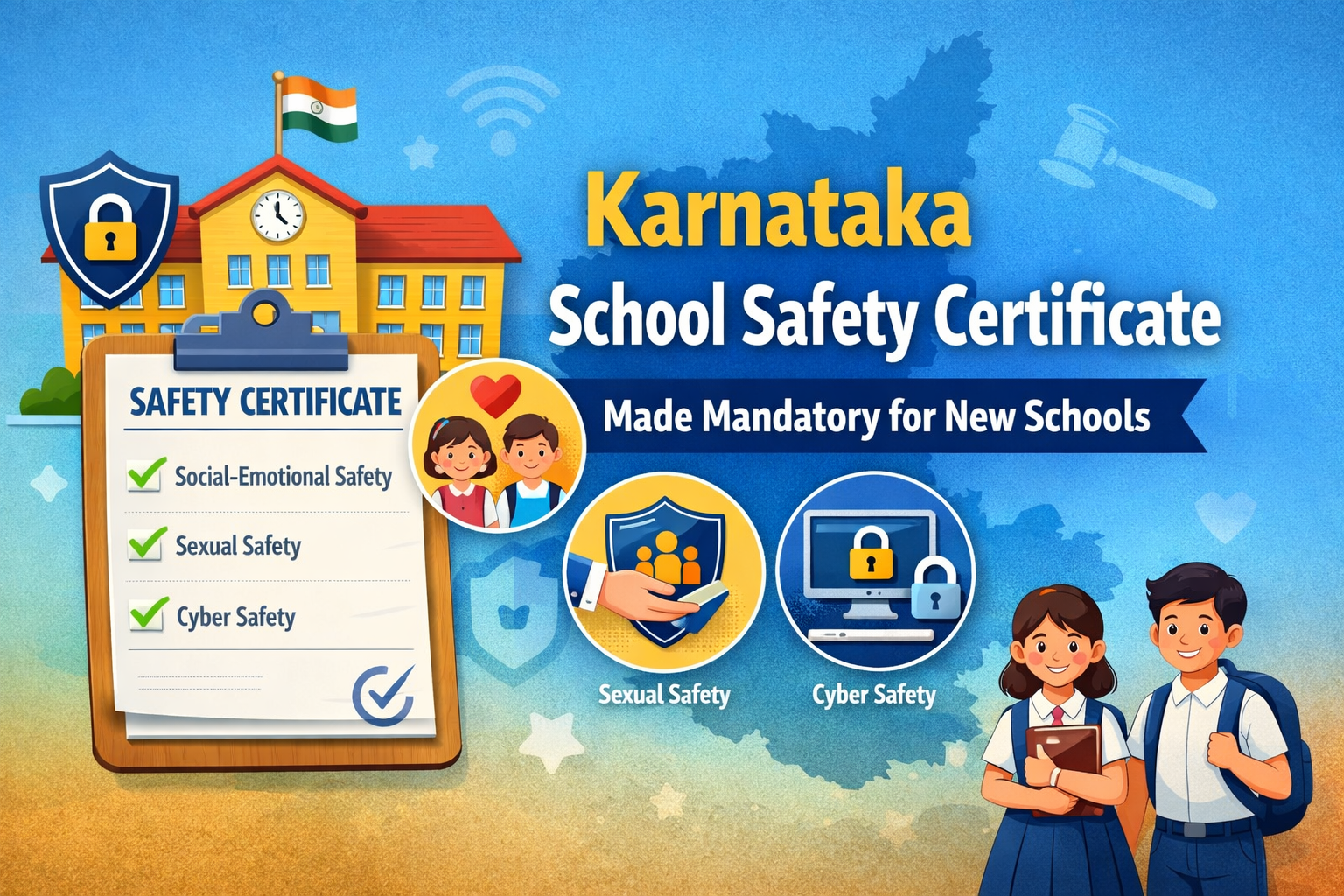
Karnataka School Safety Certificate: New Mandatory Rule for Social-Emotional, Sexual & Cyber Protection
Karnataka school safety certificate is now a mandatory new requirement for all new schools seeking registration with the Department of School Education and Literacy in Karnataka. Under this updated regulation, school authorities must obtain and submit certificates proving that their institutions meet standards for social-emotional, sexual, and cyber safety before they can be recognized and permitted to operate. This landmark initiative aims to strengthen child protection, promote student well-being, and ensure safer learning environments across the state.
In this comprehensive guide, we’ll break down what this policy means, why it matters, and how schools can prepare to comply — plus the broader context of child safety regulation shaping education in Karnataka.
What Is the New Karnataka School Safety Certificate Requirement?
Starting in early February 2026, the Karnataka government has introduced a requirement for all new school registrations to be accompanied by three separate safety certificates:
-
Social-Emotional Safety Certificate – demonstrating that the school has systems to support students’ emotional development and psychological well-being.
-
Sexual Safety Certificate – confirming that the school environment protects students from sexual abuse and harassment and adheres to preventive measures.
-
Cyber Safety Certificate – verifying that the institution has robust practices to protect students from online risks, cyberbullying, and unsafe digital content.
These certificates must be prepared and submitted before the Department processes the school’s registration application. Schools that fail to present these documents risk delays, rejection of their application, or inability to open.
Why Was This Rule Introduced?
The move reflects a broader shift in education policy, focusing not just on academics, but on holistic child development and safety. Historically, school registration guidelines concentrated on infrastructure, fire safety, and basic facilities. Now, child protection — both offline and online — is being prioritized to address modern challenges:
1. Rising Awareness Around Student Well-Being
Across India, educators and policymakers are increasingly emphasizing social and emotional learning — including how students manage emotions, build resilience, and maintain positive relationships. Independent educational frameworks promote these competencies as foundational for healthy development.
2. Growing Concern Over Online Risks
With children spending more time on digital devices, cyber safety has become a core part of modern education. Schools must now demonstrate they have policies for safe internet use, supervision of digital spaces, and education on digital citizenship.
3. Intent to Prevent Abuse and Promote Secure Environments
Sexual safety training and protective frameworks like the POCSO Act — which addresses Protection of Children from Sexual Offences — have guided policy reforms across Indian states. Karnataka’s new certificates aim to standardize how schools safeguard students from abuse, harassment, and exploitation.
Components of the Safety Certificates
Although the full text of the new regulatory guidelines is internal to the Department’s policy documents, school administrators and education experts suggest the core requirements for each certificate likely include the following areas:
Social-Emotional Safety Checklist
-
Plans for student counseling and emotional support.
-
Mechanisms for identifying and addressing bullying or mental distress.
-
Training for teachers on student behavior and emotional well-being.
Sexual Safety Checklist
-
Clear child protection policies aligned with legal frameworks like the POCSO Act.
-
Trained staff for sexual abuse awareness and prevention programs.
-
Protocols for handling and reporting sensitive incidents.
Cyber Safety Checklist
-
Internet safety protocols and supervised access to technology.
-
Policies against harmful digital content and cyberbullying.
-
Curriculum integration of digital citizenship and online risk awareness.
Existing child safety policy templates used in school systems often include similar measures — for example, supervision of computer room access, blocking inappropriate sites, and age-appropriate digital literacy education.
What Schools Are Saying
The new requirement has drawn mixed reactions from school administrators:
-
Many private and unaided schools have expressed concerns about clarity — specifically who will issue these certificates and what exact standards must be met.
-
Some institutions argue that while they already implement safety practices, they lack clear accreditation bodies to certify compliance.
-
Others welcome the focus on student well-being but seek detailed government guidelines on documentation and inspection procedures.
As of the initial announcement, official clarifications from the Department of School Education are still awaited.
How Schools Can Prepare
To comply with the new safety certificate rules, schools should take proactive steps:
1. Develop Formal Safety Policies
Draft and implement written policies covering social-emotional support, sexual harassment prevention, and cyber safety guidelines. Formal documentation will make certification easier.
2. Train Staff and Educators
Invest in professional development so teachers, administrators, and counselors understand how to uphold and enforce safety standards.
3. Educate Students and Parents
Run awareness sessions for students and parents about online risks, consent, respectful relationships, and when/how to report concerns.
4. Seek External Verification
Where applicable, schools should collaborate with recognized child welfare organizations, certified counsellors, or education authorities to validate their compliance.
The Bigger Picture: Child Safety in Karnataka Schools
The safety certificate requirement is part of a broader landscape of educational reforms and child well-being initiatives in Karnataka:
-
The state has recently moved toward mandating mental health guidelines in all educational institutions, requiring trained counselors and comprehensive support systems.
-
Independent child protection policies have been rolled out in hostels and residential schools to safeguard children living away from home.
-
Awareness programs under the POCSO Act and similar laws are expanding in schools — now with directions for only trained professionals to conduct sessions.
These developments indicate a growing state and national emphasis on safe, supportive, and child-centered education for every learner.
The Karnataka school safety certificate requirement marks a major shift in how the state views school registration and child protection. It underscores the urgent need for proactive safety measures — not as optional extras, but as mandatory pillars of every educational institution’s foundation.
While schools currently await detailed implementation guidelines, early preparation and a focus on student well-being will position institutions to meet these evolving standards confidently.
Stay tuned for official updates and detailed compliance resources from the Karnataka Department of School Education.