

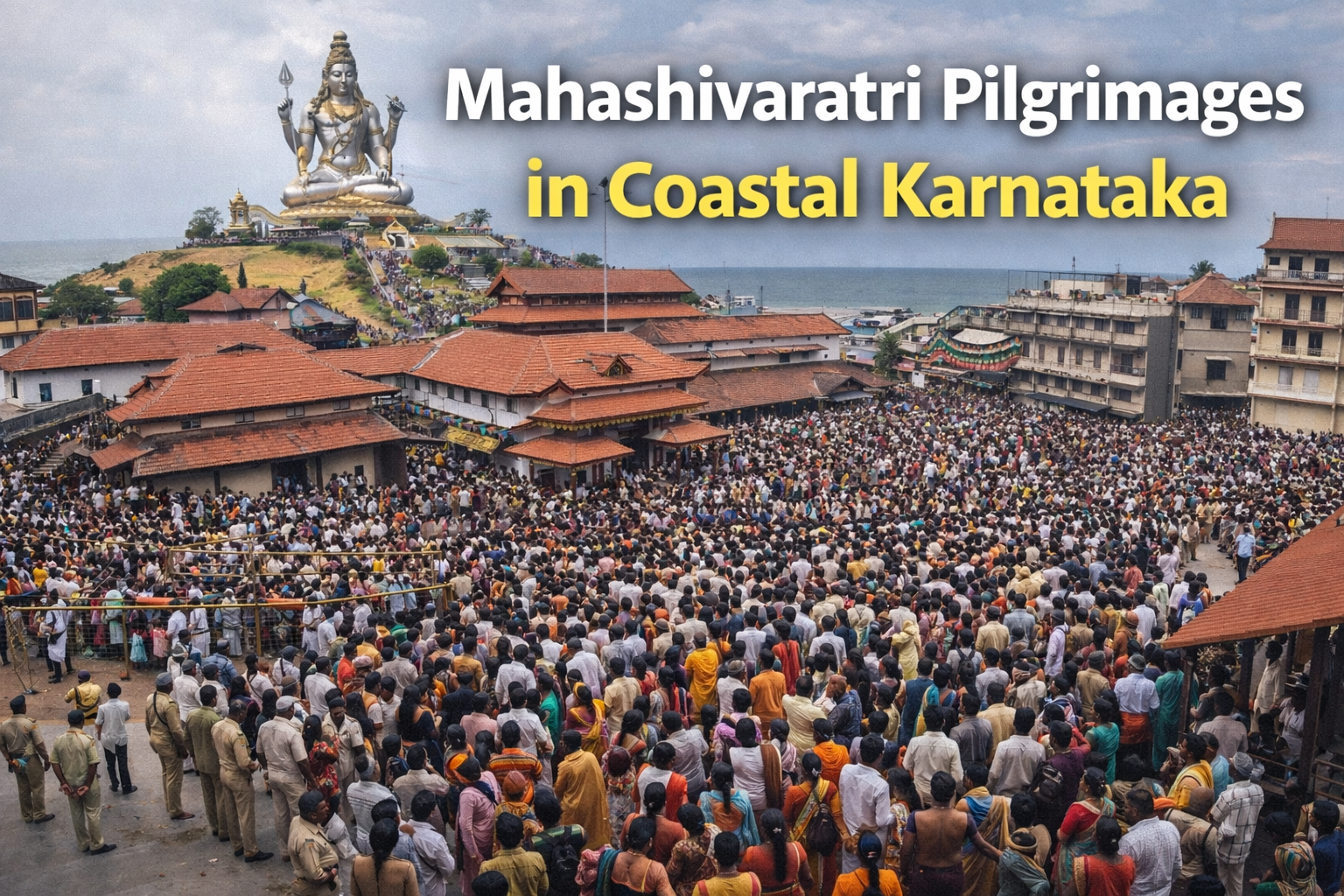
Mahashivaratri Pilgrimages in Coastal Karnataka Witness Massive Devotee Turnout
Mahashivaratri pilgrimages in coastal Karnataka witnessed an overwhelming turnout this year as lakhs of devotees thronged ancient Shiva temples across the coastal belt. From early dawn rituals to all-night prayers, the sacred festival transformed temple towns into vibrant spiritual centres, reflecting deep-rooted devotion and centuries-old traditions.
Mahashivaratri, regarded as one of the most auspicious nights dedicated to Lord Shiva, holds exceptional importance in Karnataka’s coastal districts, where temples serve not only as religious spaces but also as cultural and social anchors.
Spiritual Significance of Mahashivaratri
Mahashivaratri symbolizes the cosmic union of Lord Shiva and Goddess Parvati and is believed to be the night when Shiva performs the Tandava, the dance of creation, preservation, and destruction. Devotees observe fasting, chant mantras, and remain awake through the night in meditation.
In coastal Karnataka, Mahashivaratri is not limited to rituals—it becomes a collective spiritual journey, drawing families, ascetics, pilgrims, and tourists alike.
Major Temples That Drew Massive Pilgrimages
Several iconic temples across the coastal belt saw unprecedented crowds this year:
1. Dharmasthala Sri Manjunatha Temple
One of South India’s most revered Shiva shrines, Dharmasthala witnessed lakhs of devotees participating in:
-
Rudrabhisheka
-
Maha Mangalarati
-
Night-long bhajans
The temple administration arranged free food (anna daana), medical camps, and special queue systems to manage the rush.
2. Murudeshwar Temple
Located along the Arabian Sea, Murudeshwar offered a breathtaking spiritual experience. Devotees prayed before the towering Shiva statue as chants echoed against ocean waves, creating a deeply meditative atmosphere.
3. Mahabaleshwar Temple, Gokarna
Gokarna, often called the “Kashi of the South,” saw continuous inflow of pilgrims. The Mahabaleshwar Temple’s ancient traditions and mythological importance made it a focal point for Mahashivaratri rituals.
4. Kadri Manjunatha Temple
One of the oldest Shiva temples in the region, Kadri Manjunatha hosted special poojas, classical music performances, and cultural programs through the night.
Coastal Karnataka Transformed Into a Spiritual Corridor
During Mahashivaratri, coastal Karnataka towns resembled spiritual corridors:
-
Streets decorated with lamps and flowers
-
Temporary shelters for pilgrims
-
Continuous temple bells and chants
-
Volunteers guiding devotees
Local communities played a vital role, offering water, food, and resting spaces to visitors from across the state and neighbouring regions.
Administration and Security Arrangements
Given the massive crowds, district administrations coordinated with:
-
Police departments
-
Temple committees
-
Health services
-
Fire and emergency teams
Special traffic diversions, CCTV monitoring, drone surveillance, and crowd-control barricades were deployed to ensure safety and smooth movement.
Health departments set up first-aid booths, ambulances, and emergency response units, especially near major temples.
Cultural and Economic Impact
Boost to Temple Tourism
Hotels, lodges, and homestays reported full occupancy. Local transport services, vendors, and artisans experienced increased business.
Revival of Local Traditions
Mahashivaratri celebrations also featured:
-
Yakshagana performances
-
Bhajan groups
-
Classical Carnatic music recitals
These cultural elements reinforced the region’s spiritual identity.
Devotees Share Their Experience
Pilgrims described the experience as deeply fulfilling:
-
Many undertook barefoot journeys
-
Several observed strict fasting
-
Some performed special vows (vratas)
For many families, attending Mahashivaratri at coastal temples is an annual spiritual tradition passed down generations.
Environmental and Cleanliness Initiatives
This year, temple authorities emphasized:
-
Plastic-free zones
-
Waste segregation
-
Eco-friendly offerings
Volunteers and civic bodies ensured cleanliness around temple premises, reflecting growing awareness about sustainable pilgrimage practices.
Why Mahashivaratri in Coastal Karnataka Is Unique
What sets Mahashivaratri pilgrimages in coastal Karnataka apart is the blend of spirituality, nature, and community participation. Temples nestled near rivers, hills, and the sea offer a serene backdrop that enhances the spiritual experience.
Unlike urban celebrations, coastal observances retain ancient ritual purity while adapting to modern crowd management needs.
Looking Ahead: Growing Scale Each Year
Temple authorities expect pilgrim numbers to increase further in coming years, prompting discussions on:
-
Permanent infrastructure upgrades
-
Digital darshan booking systems
-
Expanded accommodation facilities
The festival’s growing scale highlights the need to balance devotion with safety, sustainability, and heritage conservation.
Mahashivaratri pilgrimages in coastal Karnataka once again demonstrated the enduring power of faith and tradition. As lakhs gathered in devotion, the coastal belt transformed into a living symbol of spiritual unity, cultural richness, and collective belief.
Beyond rituals, the festival reinforced community bonds and showcased how ancient traditions continue to thrive in modern times. For devotees, Mahashivaratri in coastal Karnataka remains not just a festival—but a profound spiritual journey.