

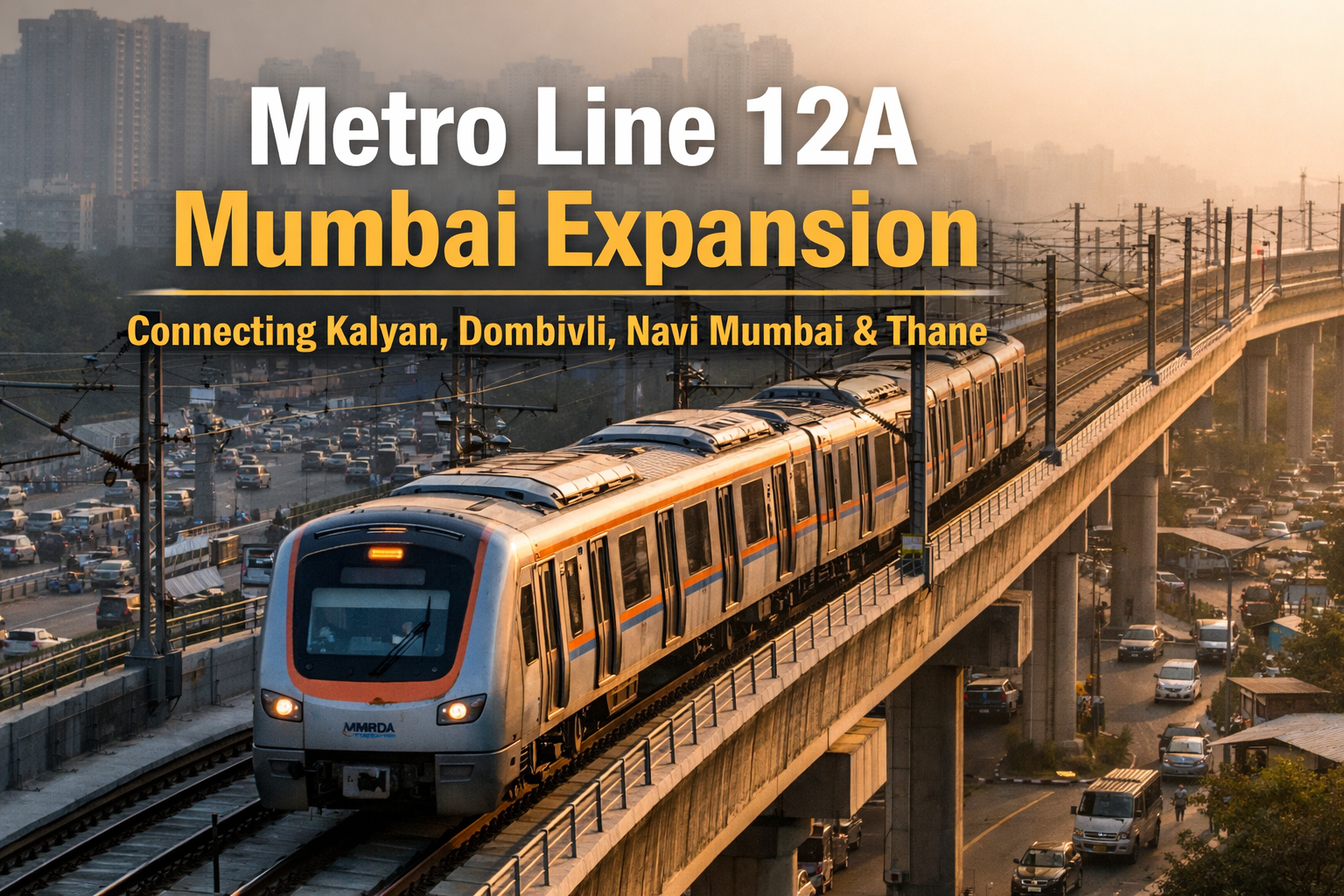
Metro Line 12A Mumbai Expansion: A Game-Changer for City Development & Infrastructure
Metro Line 12A Mumbai expansion is set to redefine urban mobility across the Mumbai Metropolitan Region as authorities push forward with a major connectivity upgrade along the Kalyan–Shilphata corridor. This ambitious infrastructure project reflects the region’s growing need for faster, safer, and more efficient public transport.
The announcement by the Mumbai Metropolitan Region Development Authority marks another major step in easing traffic congestion and improving daily commuting experiences for millions living in Kalyan-Dombivli, Navi Mumbai, Thane, and Mumbai.
Why Metro Line 12A Matters for Mumbai Region
Mumbai’s rapid urban growth has placed immense pressure on existing transport systems. Suburban railways and road networks are operating beyond capacity, leading to long commute times and daily congestion nightmares.
The Metro Line 12A Mumbai expansion directly addresses these challenges by offering:
-
Faster east–west connectivity
-
Seamless integration with existing metro and rail lines
-
Reduced dependence on private vehicles
-
Environment-friendly urban transport
This project is especially crucial for residents in fast-growing suburban belts where population density has increased sharply over the last decade.
Kalyan–Shilphata Corridor: A Strategic Link
The Kalyan–Shilphata stretch is a vital economic and residential corridor connecting:
-
Kalyan
-
Dombivli
-
Navi Mumbai
-
Thane
-
Mumbai
Currently, commuters depend heavily on overcrowded roads and local trains. Metro Line 12A is expected to drastically reduce travel time between these zones, making daily life easier for office-goers, students, and business owners.
What Is Metro Line 12A?
Metro Line 12A is a proposed metro corridor designed to:
-
Connect Kalyan-Dombivli with Navi Mumbai
-
Pass through the Shilphata industrial and residential zone
-
Integrate with existing and upcoming metro lines in MMR
Unlike traditional north–south routes, this line focuses on lateral connectivity, which has long been missing in Mumbai’s transport planning.
Reduced Travel Time, Big Impact
One of the biggest advantages of the Metro Line 12A Mumbai expansion is time efficiency.
Expected Benefits:
-
Travel time reduced by up to 50–60%
-
Predictable commute schedules
-
Less stress from traffic jams
-
Better work-life balance for daily commuters
What currently takes over an hour by road could be reduced to minutes using the metro.
Environmental Benefits of Metro Line 12A
Mumbai’s air quality and carbon emissions have been growing concerns. Metro Line 12A supports sustainable development by:
-
Lowering vehicular emissions
-
Reducing fuel consumption
-
Encouraging public transport use
-
Supporting green urban planning goals
This aligns with India’s broader push towards eco-friendly infrastructure and smart cities.
Infrastructure Development Along the Route
The metro expansion is expected to trigger a wave of development across the corridor:
-
New residential projects
-
Commercial hubs and IT parks
-
Improved road and civic infrastructure
-
Rise in property values near stations
Areas near proposed metro stations often see increased investment, benefiting both residents and local businesses.
Real Estate & Economic Boost
Historically, metro connectivity has been a major catalyst for real estate growth in Mumbai. The Metro Line 12A Mumbai expansion is likely to:
-
Increase demand for housing in Kalyan-Dombivli
-
Make Navi Mumbai more accessible for workers
-
Boost rental markets near stations
-
Encourage mixed-use development
For investors and homebuyers, this corridor could become one of the most promising growth zones in the MMR.
Who Will Benefit the Most?
The project will directly benefit:
-
Daily office commuters
-
Industrial workers in Shilphata belt
-
Students traveling between cities
-
Small business owners
-
Logistics and service sector employees
By improving mobility, Metro Line 12A strengthens economic participation across the region.
Integration With Mumbai’s Metro Network
Metro Line 12A is designed to integrate smoothly with:
-
Existing Mumbai Metro corridors
-
Suburban railway stations
-
Bus and feeder services
This ensures seamless last-mile connectivity, which is critical for the success of any urban metro project.
Challenges & Execution Strategy
Large infrastructure projects come with challenges such as:
-
Land acquisition
-
Traffic management during construction
-
Environmental clearances
-
Coordination between multiple agencies
However, lessons learned from earlier metro projects in Mumbai have helped authorities streamline planning and execution for newer corridors like Line 12A.
Long-Term Vision for Mumbai
The Metro Line 12A Mumbai expansion is not just a transport project—it’s part of a long-term vision to:
-
Decongest Mumbai city
-
Promote decentralized growth
-
Improve quality of urban life
-
Support sustainable economic expansion
As Mumbai continues to grow beyond its traditional boundaries, such projects become essential for balanced regional development.
What’s Next?
While timelines and final alignments will be updated as the project progresses, planning and groundwork signal strong momentum. Once operational, Metro Line 12A is expected to become a lifeline for commuters across multiple cities in the Mumbai Metropolitan Region.
Metro Line 12A Mumbai expansion represents a crucial shift in how Mumbai approaches city development and infrastructure. By focusing on connectivity beyond the city core, it promises faster commutes, greener transport, and new growth opportunities for millions.
For residents, commuters, investors, and policymakers alike, this metro corridor could shape the future of urban living in the region.