

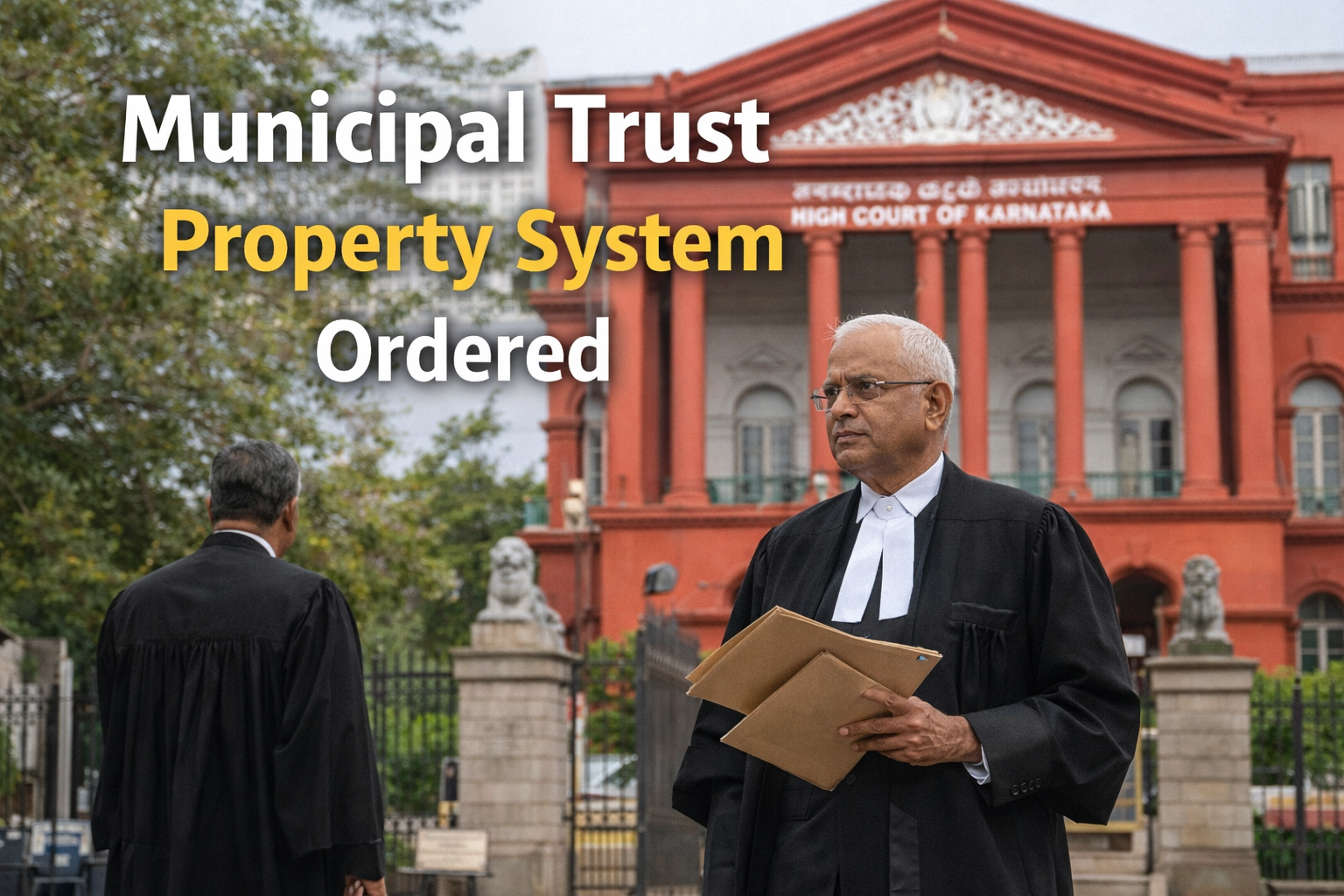
Municipal Trust Property System Ordered
Municipal trust property system has moved to the centre of public governance debate after the High Court issued a landmark directive ordering the state government to establish a comprehensive, transparent, and technology-driven framework for managing municipal trust properties. The ruling aims to curb decades of mismanagement, illegal transfers, and encroachments involving properties meant for public welfare.
This judicial intervention marks a turning point in how urban local bodies manage land and assets that belong to the people.
What the High Court Ordered
In a significant judgment, the Karnataka High Court directed the state government to create a dedicated Municipal Trust Property Management System (MTPMS). The court emphasised that municipal trust properties are public assets held in trust, not commodities that can be leased, sold, or transferred without strict oversight.
Key Directions from the Court
The court ordered that the proposed system must:
-
Digitally record all municipal trust properties
-
Clearly identify ownership, usage, and lease details
-
Prevent unauthorised transfers or encroachments
-
Ensure transparency and public accountability
-
Allow periodic audits and monitoring
The judges observed that the absence of a centralised system had enabled systemic abuse, resulting in the loss of valuable public land over the years.
What Are Municipal Trust Properties?
Municipal trust properties include lands and buildings owned by municipal corporations, city councils, and town municipalities, held specifically for public purposes such as:
-
Public markets
-
Schools and colleges
-
Hospitals and health centres
-
Parks, playgrounds, and lakes
-
Community halls and libraries
-
Bus stands and civic amenities
These properties are legally considered trust assets, meaning the government is only a custodian, not the owner.
Why the Court Intervened
The High Court’s intervention came after repeated complaints and petitions highlighted:
-
Illegal leasing of municipal lands
-
Conversion of public land for private commercial use
-
Long-term leases at throwaway prices
-
Missing or outdated land records
-
Lack of accountability in urban local bodies
The court noted that many municipal bodies did not even have complete lists of the properties they owned, making them vulnerable to encroachment and misuse.
Key Features of the Municipal Trust Property System
The proposed municipal trust property system is expected to be a statewide digital platform with multiple layers of verification and oversight.
Comprehensive Digital Registry
Every municipal trust property must be:
-
Digitally mapped
-
Geo-tagged
-
Assigned a unique identification number
-
Linked with ownership documents and land records
This will eliminate ambiguity about property boundaries and ownership.
Transparent Lease and Usage Records
The system will store:
-
Lease agreements
-
Duration and renewal clauses
-
Rent amounts and payment history
-
Purpose for which the property is used
Any deviation from the approved use can be flagged automatically.
Public Access and Accountability
One of the most important aspects is public visibility. Citizens will be able to:
-
View lists of municipal trust properties
-
Check current usage and lease details
-
Report suspected encroachments or misuse
This creates a layer of citizen-driven monitoring, something the court strongly encouraged.
Audit and Oversight Mechanism
The court directed that:
-
Periodic audits must be mandatory
-
Properties should be reviewed annually
-
Any irregularities must be reported to the state government
Officials responsible for violations could face disciplinary action.
Impact on Urban Local Bodies
The High Court’s order will significantly affect:
-
Municipal corporations
-
City municipal councils
-
Town municipal councils
-
Urban development authorities
Local bodies will now be required to standardise property management practices instead of operating in silos.
Administrative Challenges
While the order is transformative, implementation will not be easy:
-
Many municipalities lack digitised records
-
Staff training will be required
-
Coordination between revenue, urban development, and IT departments is critical
However, the court made it clear that administrative difficulty cannot justify inaction.
Why This Matters for Citizens
The municipal trust property system has direct implications for ordinary citizens:
1. Protection of Public Spaces
Encroachments on parks, lakes, and playgrounds can be identified and reversed.
2. Better Revenue for Cities
Fair leasing and proper rent collection can significantly boost municipal revenues.
3. Reduced Corruption
Digitisation limits discretionary power and backdoor deals.
4. Planned Urban Development
Cities can plan infrastructure better when land records are accurate and transparent.
Past Failures Highlighted by the Court
The High Court noted that earlier attempts to regulate municipal properties failed due to:
-
Manual record-keeping
-
Political interference
-
Absence of penalties
-
Weak enforcement mechanisms
The new system is expected to address these loopholes through technology-led governance.
Legal Significance of the Ruling
From a constitutional perspective, the judgment reinforces:
-
Doctrine of Public Trust
-
Accountability of elected local bodies
-
Citizens’ right to public resources
Legal experts believe this ruling could become a model for other states facing similar issues with municipal land mismanagement.
What Happens Next
Following the order, the state government is expected to:
-
Frame rules for the municipal trust property system
-
Allocate budget for digitisation
-
Appoint a nodal authority
-
Set timelines for compliance
The High Court has retained the right to monitor implementation, signalling that this will not remain a paper directive.
Bigger Picture: Reforming Urban Governance
The municipal trust property system aligns with broader reforms aimed at:
-
Strengthening urban governance
-
Improving transparency
-
Making cities financially self-reliant
-
Protecting public assets for future generations
As urbanisation accelerates, such systems become essential to prevent irreversible loss of civic resources.
The High Court’s directive to establish a municipal trust property system represents a decisive step toward cleaner, more accountable urban administration. By enforcing transparency, digitisation, and public oversight, the court has laid the foundation for safeguarding public assets that belong to the people.
If implemented effectively, this system could transform how cities manage their land — ensuring that public property remains public, protected, and productive.