

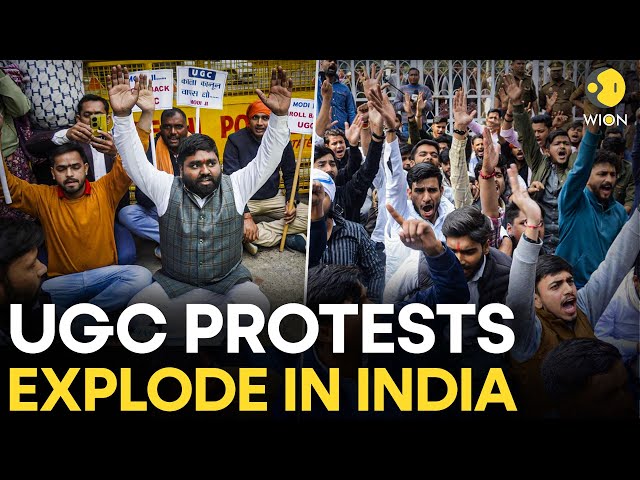
The UGC Equity Regulations Protest in Patna has emerged as one of the most significant flashpoints in India’s ongoing debates about higher education reform. In January 2026, the University Grants Commission (UGC) notified a new set of rules — officially titled the Promotion of Equity in Higher Education Institutions Regulations, 2026 — aimed at eliminating discrimination and promoting inclusion. However, these rules have unexpectedly ignited large protests in Patna and across the country, drawing students, political figures, legal experts, and civil society groups into a heated controversy.
This detailed analysis explains what’s behind the protests, why they’ve gained momentum in Patna, the reactions from student groups and politicians, the Supreme Court’s intervention, and what the future might hold for higher education policy in India.
What Are the UGC Equity Regulations of 2026?
The UGC’s new equity regulations — introduced in January 2026 — are intended to replace the previous 2012 anti-discrimination framework with a more binding, enforceable system to ensure fairness and equal opportunity in higher education institutions.
Key features include:
-
Mandatory Equity Committees and Equal Opportunity Centres in all universities and colleges.
-
Helplines and reporting mechanisms for discrimination complaints.
-
Institutional accountability, with possible action if colleges fail to comply.
-
Expanded definitions of discrimination to include caste, gender, disability, and other grounds meant to protect historically marginalized groups.
The goal is to create mechanisms that prevent discrimination and to have formal structures that facilitate support and investigation — but critics say the language is vague and the application could be uneven.
Why the Protests Started in Patna
In Patna, the capital of Bihar, the situation escalated rapidly when hundreds of students took to the streets to oppose the new policy. These protesters argue that the regulations:
-
Could discriminate against general category students by excluding them from certain protections or by making them vulnerable to unbalanced complaint processes.
-
Lack clear safeguards against misuse, particularly around false allegations.
-
Might sow division within campuses by focusing too narrowly on identity categories.
These student demonstrations, organized by groups including the All Bihar Student Union and others representing general category voices, were marked by strong slogans and significant mobilization in key city areas.
Many protesters believe the regulations, though framed as equity measures, have unintended consequences that threaten merit-based academic environments and create tension along caste lines — a sensitive political subject in Bihar and across northern India.
Political Polarization Around the Issue
The protests in Patna have not remained confined to campus activists; political parties have rapidly joined the fray.
Opposition and Criticism
-
Rashtriya Janata Dal (RJD) leaders openly criticized the UGC policy and the central government’s approach, questioning the intent behind the regulations and demanding more transparent dialogue.
-
Several opposition figures have also framed the dispute as a larger debate about federalism, autonomy, and educational governance — arguing that such sweeping changes should involve broader consultation.
Support for Protection of Rules
Not all political voices oppose the regulations. For example, Bahujan Samaj Party (BSP) chief Mayawati publicly backed the equity regulations and criticized calls for rollback as unjustified, emphasizing the original intention to protect disadvantaged groups.
Central Government and Ministerial Responses
Union Education Minister Dharmendra Pradhan defended the regulations, stating they were designed to ensure fairness and prevent misuse — asserting that discrimination against any group would not be tolerated.
Supreme Court’s Intervention and Nationwide Impact
As protests spread beyond Patna to cities like Jaipur, Delhi, and Indore, the Supreme Court of India intervened. On 29 January 2026, the Court stayed the implementation of the 2026 UGC equity regulations, citing concerns that key provisions were vague and potentially open to misuse. This decision means the older 2012 regulations remain in effect until further notice.
The stay by the Supreme Court was widely covered and triggered mixed reactions:
-
Supporters of the stay celebrated the decision as protecting constitutional equality and preventing rushed policy implementation without adequate clarity.
-
Critics of the stay argue that such judicial action could delay much-needed reforms to address deep-rooted discrimination in campus life.
Union Minister Giriraj Singh publicly welcomed the Supreme Court’s stay and accused political opponents of exploiting the issue for partisan aims.
What Protesters Are Demanding
The core demands of those protesting — particularly general category student groups — include:
-
Complete withdrawal of the 2026 regulations.
-
Clear safeguards against misuse or arbitrary complaint processes.
-
Inclusive consultation with all stakeholders before any future policy is rolled out.
-
Neutral and merit-based educational environments, free from what they view as divisive identity-based measures.
Protesters have also called for nationwide strikes and planned demonstrations, signaling a sustained mobilization rather than an isolated event.
Broader Debate: Inclusion vs. Division
At the heart of the controversy is a larger philosophical debate: How can India balance the promise of social equity with the imperative of maintaining fairness for all students?
Supporters of the new regulations argue that they are essential to address historic injustices and systemic discrimination in higher education. Detractors counter that without precise definitions and comprehensive safeguards, policies meant to promote inclusion might inadvertently foster campus division and unequal treatment.
Legal experts and commentators point out that ambiguity in policy language — especially around sensitive issues like caste and discrimination — can be dangerous if not carefully crafted and widely understood before enforcement.
What Happens Next?
The Supreme Court will continue to hear petitions regarding the regulation’s legality, constitutional validity, and potential for misuse. Meanwhile, the UGC and Ministry of Education are expected to review the feedback and consider revisions.
For students and institutions, the 2012 regulatory framework remains in place for now. However, the clash in Patna and other cities has opened a wider conversation about educational policy, representation, and how India envisions a fair and inclusive academic future.
The UGC Equity Regulations Protest in Patna is more than a student demonstration — it’s part of a national debate on how equity, identity, and fairness intersect with education policy. With political factions taking sides, legal challenges underway, and widespread media attention, this issue will likely continue shaping public discourse and policymaking in India’s higher education landscape.